
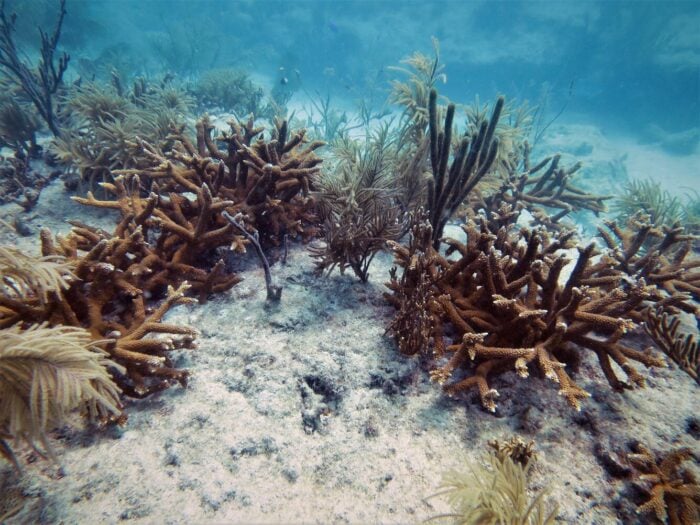
A recent study published in the journal Science concluded that two critical reef-building coral species off Florida’s coast have been declared functionally extinct following an intense marine heatwave that happened in 2023.
2023 marine heatwave off the coast of Florida
In 2023, a marine heatwave raised sea surface temperatures to record levels across Florida’s 350-mile (560-kilometer) reef tract. During the marine heatwave, average ocean temperatures in the Florida Keys stayed above 88 °F (about 31 °C) for 41 days. This led to heat stress that was two to four times higher than historical averages.
Impact of the marine heatwave on corals in Florida
As a result of this heatwave, two coral species, Elkhorn coral (Acropora palmata) and Staghorn coral (Acropora cervicornis), experienced extremely high mortality. In the Florida Keys and Dry Tortugas, death rates ranged from about 97.8 percent to 100 percent. Scientists now consider these two ecologically critical species of corals functionally extinct along the reef.

What functionally extinct means
“Functionally extinct” occurs when a species’ population becomes too small to fulfill its ecological role, even if a few individuals remain alive. Elkhorn and staghorn corals are known for their branching structures that create complex habitats for fish, invertebrates, and other marine life. Their loss means that Florida’s reef is losing the structure that once supported one of the most diverse ecosystems in U.S. coastal waters.
Geographic importance of Florida’s coral reef
Florida’s Coral Reef stretches from the Dry Tortugas to the northern edge of the Florida Keys and then continues along the coast toward Miami. It is the only living barrier reef in the continental United States and plays an important geographic role in protecting southern Florida’s coastline. Coral reefs absorb wave energy and help reduce erosion, flooding, and storm damage.
Florida’s coral reef has faced stress for decades from several sources, including coastal pollution, coral disease, and ocean acidification. Since the late 1970s, these pressures have reduced Acropora corals to only a small fraction of their original population.
Next steps for conservation
Researchers are now focusing on developing and testing corals that can better tolerate higher temperatures. This includes crossbreeding heat-tolerant genotypes from Caribbean populations and studying how corals and their symbiotic algae adapt to extreme environments. Mapping “thermal refuges,” or areas that remain cooler during heatwaves, is also becoming an important part of restoration planning for Florida’s coral reefs.
The study
Manzello, D. P., Cunning, R., Karp, R. F., Baker, A. C., Bartels, E., Bonhag, R., … & Williamson, O. M. (2025). Heat-driven functional extinction of Caribbean Acropora corals from Florida’s Coral Reef. Science, 390(6771), 361-366. DOI: 10.1126/science.adx7825
Tollefson, J. (2025, October 23). These iconic corals are nearly extinct due to heatwaves: can they be saved? Nature.
