
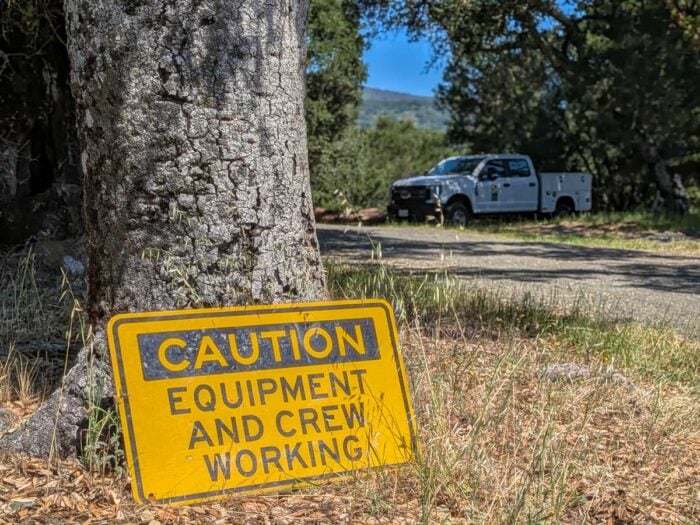
This editorial is the first in a micro-geography series examining how governmental environmental narratives actually manifest spatially on the ground. Using Midpeninsula Regional Open Space District and its Bear Creek Redwoods Open Space Preserve as a case study, the series examines the gap that can emerge between public-facing environmental policy and the actual practices at open space preserves during ecologically sensitive periods such as nesting season.
Midpen’s “Mowing to Mimic Nature” narrative and the reality at Bear Creek Redwoods: When “timing is everything” meets the realities of nesting season
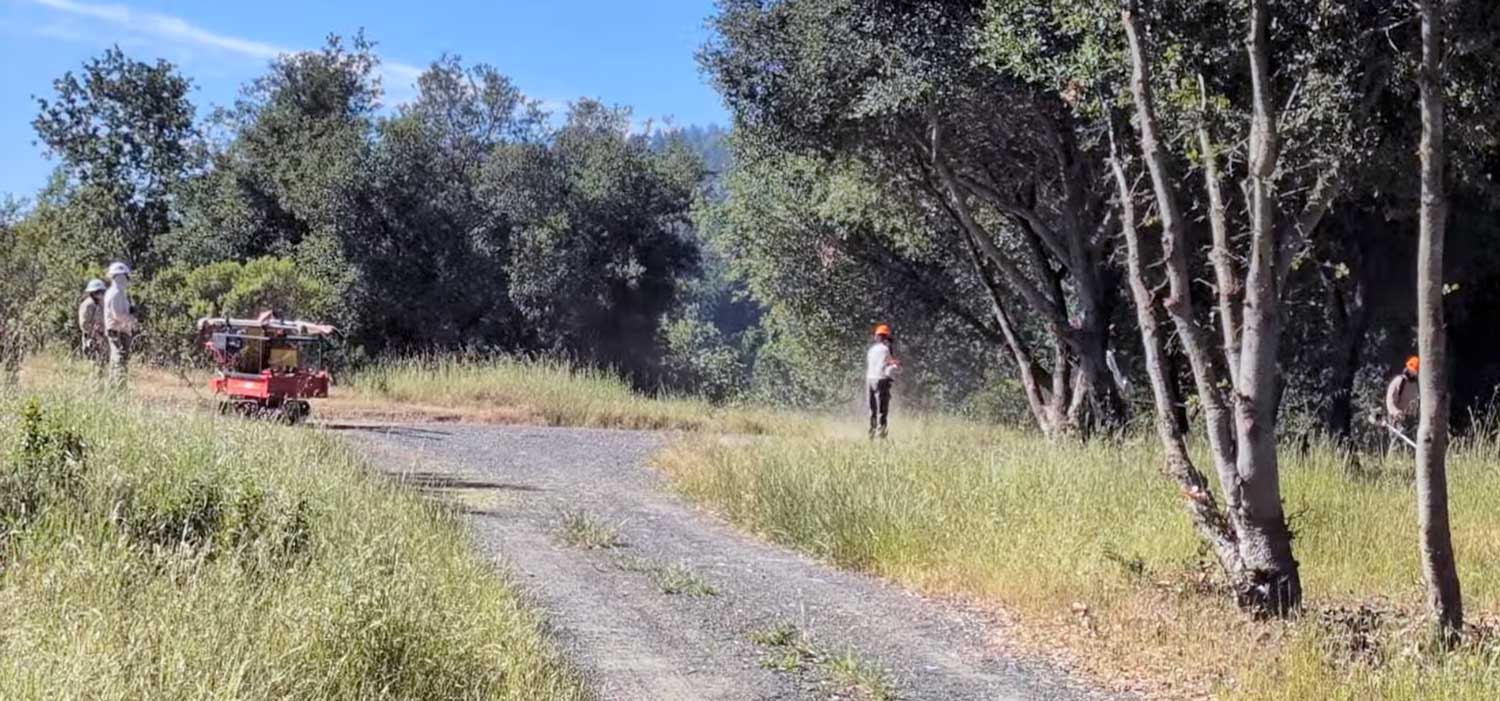
On a recent hike, Bear Creek Redwoods Open Space Preserve felt more like an active work zone than an open space preserve in the middle of nesting season. The jarring sounds of chainsaws and weed whackers echoed across the landscape, at times drowning out the calls of nesting birds as I moved through the preserve.
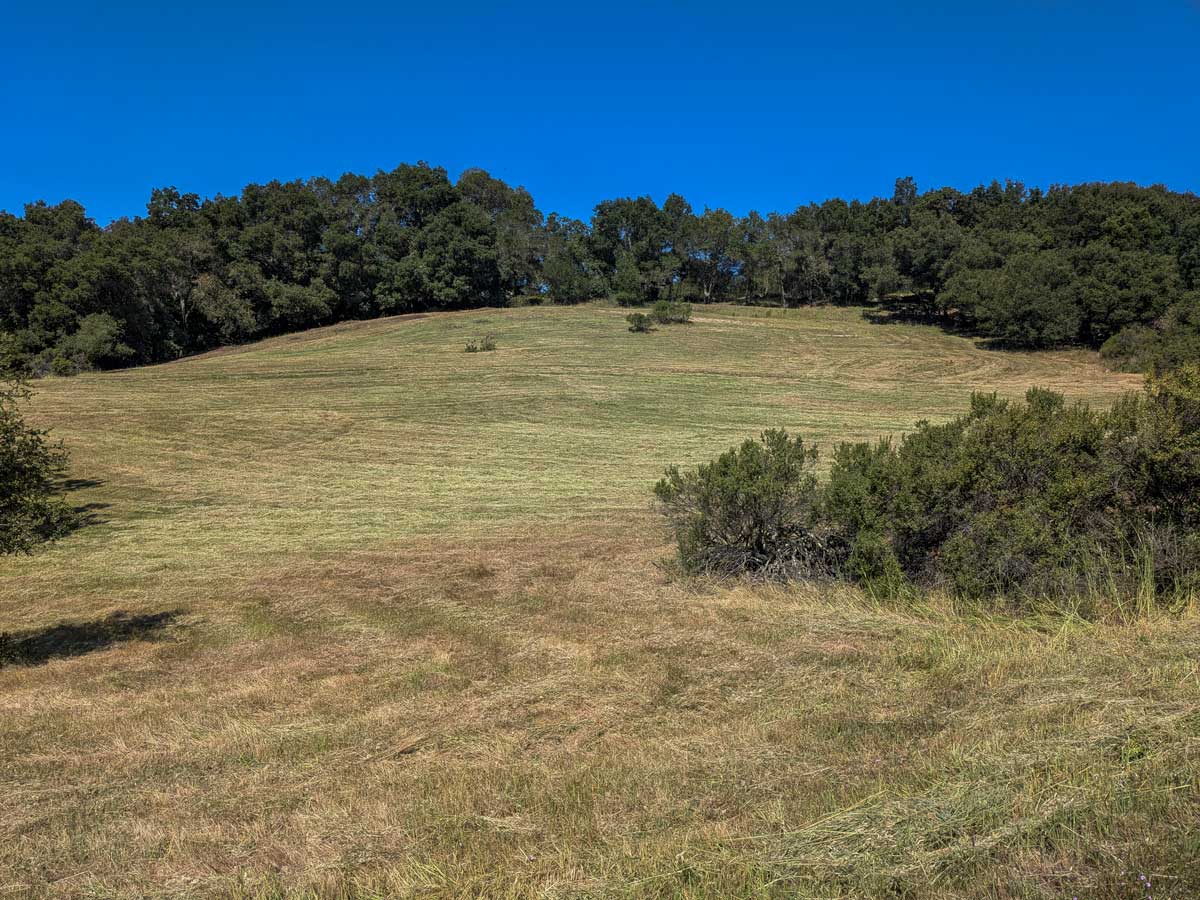
What stunned me was coming upon a meadow that, just three weeks earlier, had been tall with dense spring vegetation including native wildflowers. Still-green drying grass lay scattered across short cropped stubs, with visible mower striations cutting back and forth across the hillside. Recently disturbed fields are often quickly exploited by opportunistic species such as blackbirds and scrub jays, both of which were among the few birds visible in the freshly mowed meadow.
Around that same time, Midpen published a stewardship article on spring grassland mowing presented under the themes “Timing is Everything” and “Mowing to Mimic Nature.”
Midpen’s stewardship article presented spring mowing as ecologically beneficial and modeled after natural disturbance. Yet Midpen’s own nesting bird guidance recognizes spring grasslands as sensitive breeding habitat where disturbance should be minimized during nesting season, even as mowing, chainsaws, and other vegetation removal activity continued across Bear Creek Redwoods during peak breeding season.
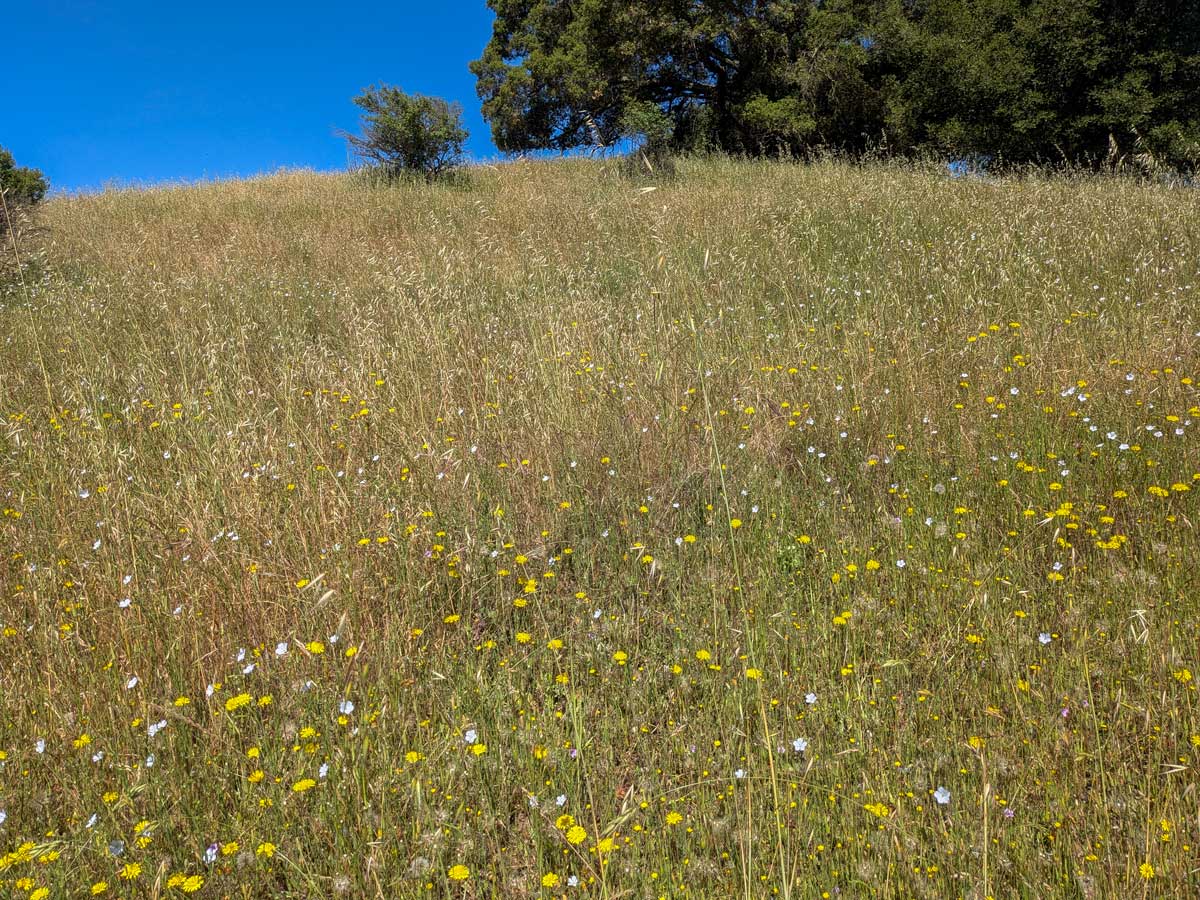
Just downhill from recently mowed fields, nearby meadows still held dense spring vegetation and blooming native wildflowers.
Where are the grassland birds?
Midpen’s article never mentioned grassland birds at all, despite discussing spring mowing during peak nesting season. Instead, it framed spring mowing as beneficial ecological stewardship rooted in natural disturbance, with no meaningful discussion of how spring vegetation functions as active nesting habitat for many grassland species.
That omission was especially striking because spring grasslands are not dormant landscapes during this period. They function as active breeding habitat for many grassland bird species, with dense seasonal vegetation providing concealment, nesting structure, and protection from predators.
Fire, grazing, and the biological importance of timing
The deeper ecological issue is timing. In California grassland ecosystems, spring is one of the most biologically sensitive periods of the year. By early May, many birds are actively nesting, incubating eggs, feeding nestlings, and relying on dense seasonal vegetation for concealment and protection from predators. In healthy spring grasslands, much of this activity remains hidden beneath the vegetation itself.
Many grassland birds nest directly on or very near the ground, where eggs and nestlings are visually difficult to detect even at close range. Concealment is a critical part of reproductive success, with dense spring vegetation helping shield nests from predators and repeated disturbance during nesting season.
Ground nests hidden within dense grass can be nearly impossible to detect once mowing equipment enters a field.
Disturbance during this period can expose nests, remove protective cover, interrupt feeding behavior, increase predation risk, and increase the likelihood of nest abandonment or nest failure. That heightened ecological sensitivity is precisely why many wildlife management frameworks emphasize avoidance during breeding season. One of Midpen’s own grassland planning documents acknowledges this directly, stating:
“Spring mowing shall not occur because of potential impacts to ground nesting bird species.”
Despite that guidance, Midpen’s stewardship article avoided discussing nesting birds while framing spring mowing as beneficial ecological stewardship, even though Midpen’s own public statements elsewhere emphasize avoiding vegetation management projects during nesting season whenever possible.
One example appeared on Midpen’s Wildland Fire Resiliency page:
As part of Midpen’s ecological approach to vegetation management, we are careful not to impact sensitive plants and wildlife. One way we do this is to avoid work during nesting bird season, which ends September 1.
UPDATE 6/2/26: For an undisclosed reason, and after this article was first published, Midpen removed the second sentence of the above statement. A review of the Wayback Machine archive suggests it was updated sometime between May 14 and May 24, 2026.
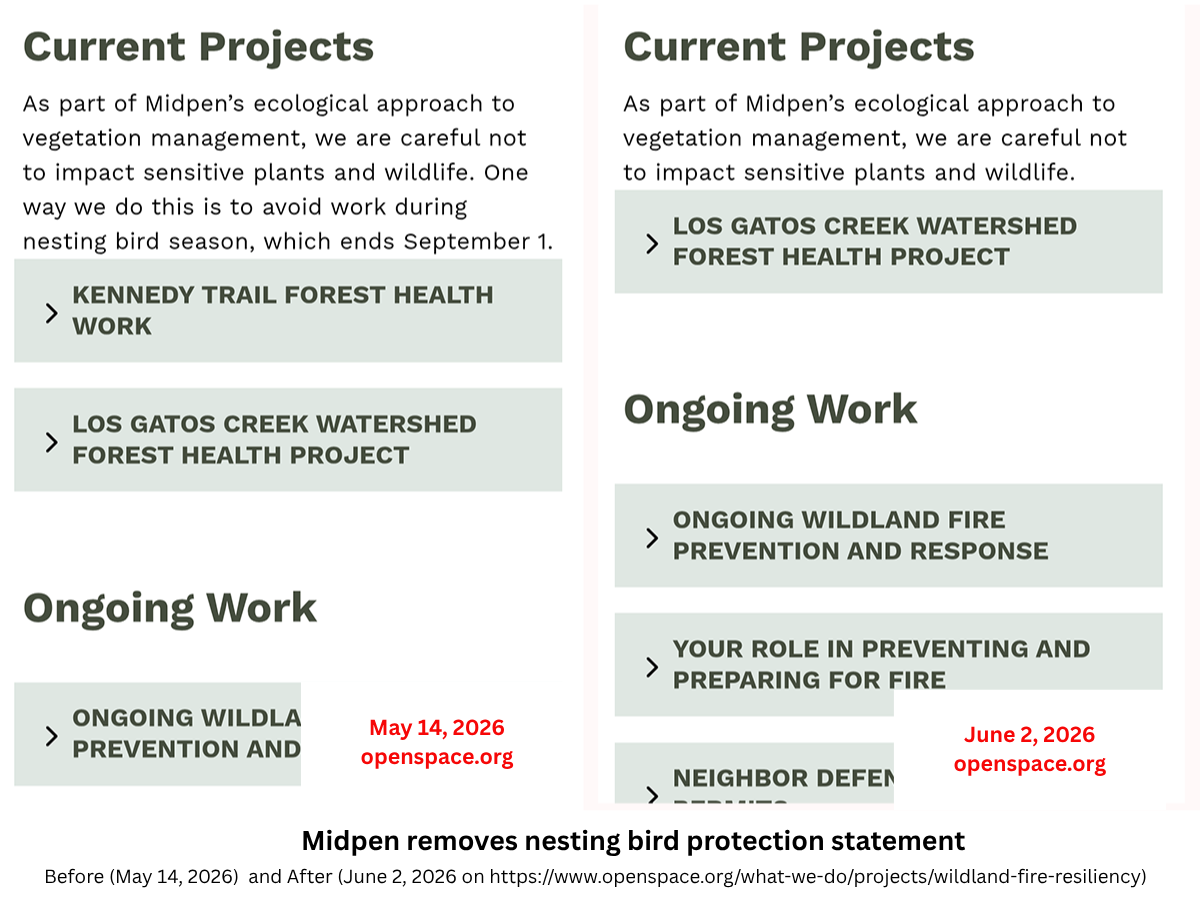
Screenshot comparison of Midpen’s Wildland Fire Resiliency webpage. The statement, “One way we do this is to avoid work during nesting bird season, which ends September 1,” was present on May 14, 2026 (left). The statement was cited in a Geography Realm article published May 11, 2026. By June 2, 2026 (right), the language had been removed from the webpage.
Mowing does not mimic the ecological functions of wildfire
Although mowing reduces vegetation height, it does not reproduce many of the ecological functions associated with fire, including nutrient recycling, stimulation of some native plant germination, and the removal of accumulated organic material from the landscape. Mechanized mowing and wildfire are fundamentally different ecological processes.
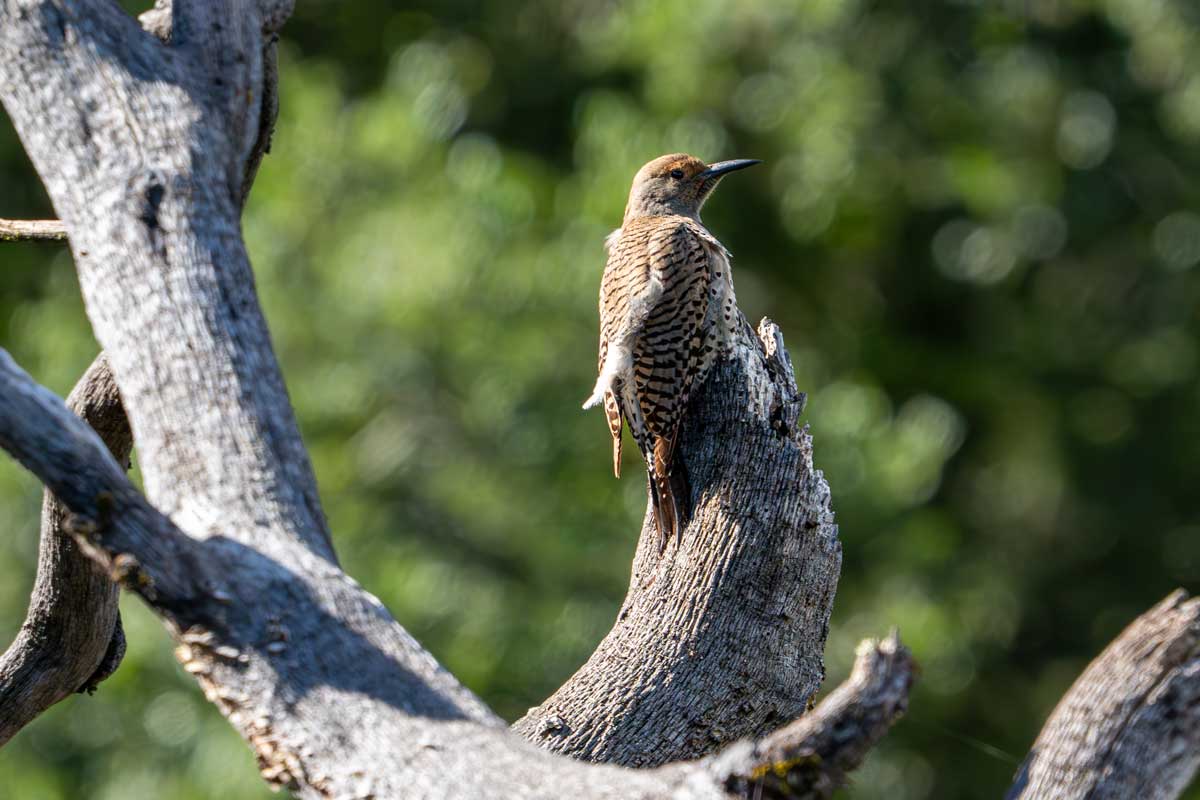
Historical burning practices in California were also highly seasonal and culturally specific rather than broad uniform cutting during peak spring growth.
Patchy wildlife grazing versus uniform mowing
Wildlife grazing also functions very differently from mechanized mowing. California grasslands are naturally shaped over time by uneven grazing pressure, seasonal wildlife movement, indigenous burning, and patchy disturbance patterns that create diverse vegetation structure across the landscape.
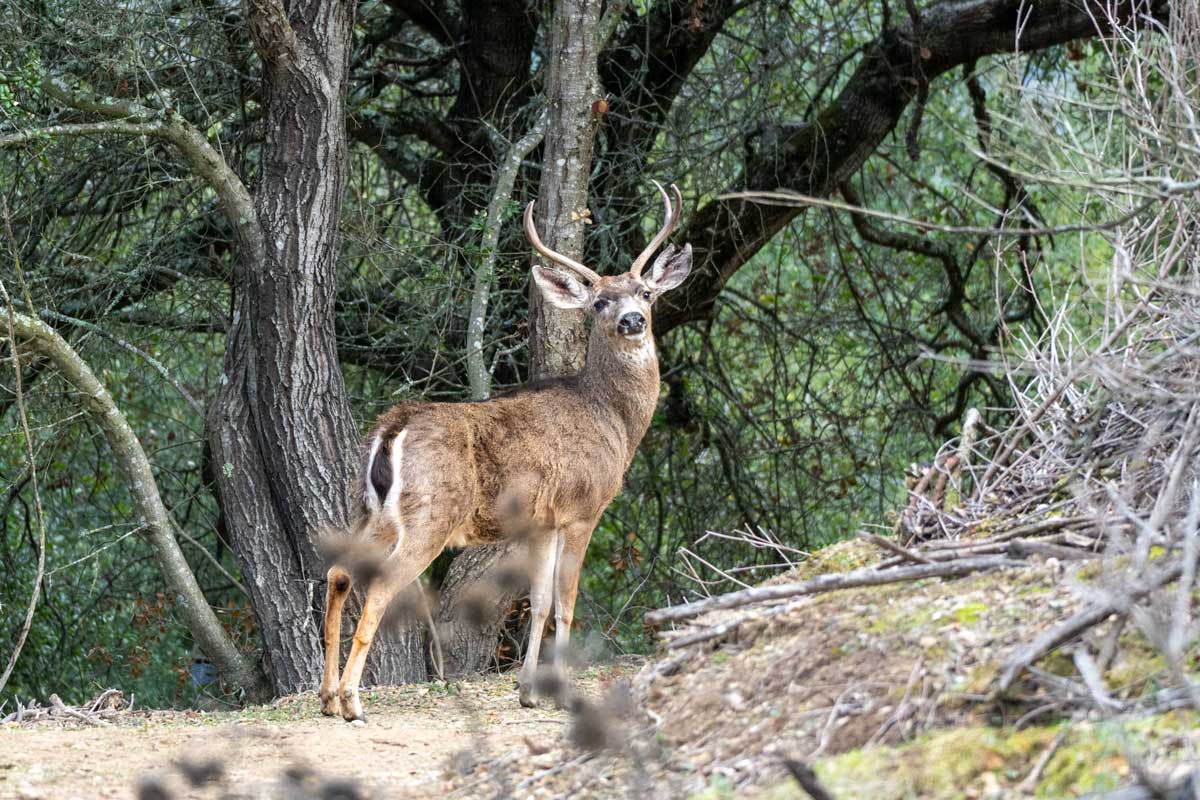
Natural disturbance patterns rarely affect entire grassland areas uniformly at the same height and at the same moment across the landscape. By comparison, mechanical mowing is rapid, uniform, and non-selective, reducing vegetation across broad areas to the same height all at once.
That simplification was visible in the meadow itself, where what had recently been dense spring vegetation had been flattened into short uniform stubble across the field.
Mowing is not a simple solution for invasive species
The issue is not whether mowing can ever play a role in grassland management, but how, where, and especially when it occurs. The article’s portrayal of invasive species management was similarly incomplete.
A Grassroots Ecology article discussing medusahead management describes mowing as a highly targeted intervention tied to species-specific timing and carefully planned seasonal implementation designed to reduce seed production before the invasive grass could spread further. That approach differs substantially from presenting broad spring mowing as a generalized ecological benefit modeled after natural disturbance.
Scientific literature on mowing in California preserves is considerably more nuanced than the stewardship narrative suggests. Researchers generally agree that mowing can help suppress some invasive grasses under specific conditions, but ecological outcomes depend heavily on timing, scale, intensity, frequency, and what species are present on the landscape.
In other words, mowing is not a universally “one size fits all” tool for dealing with invasive species.
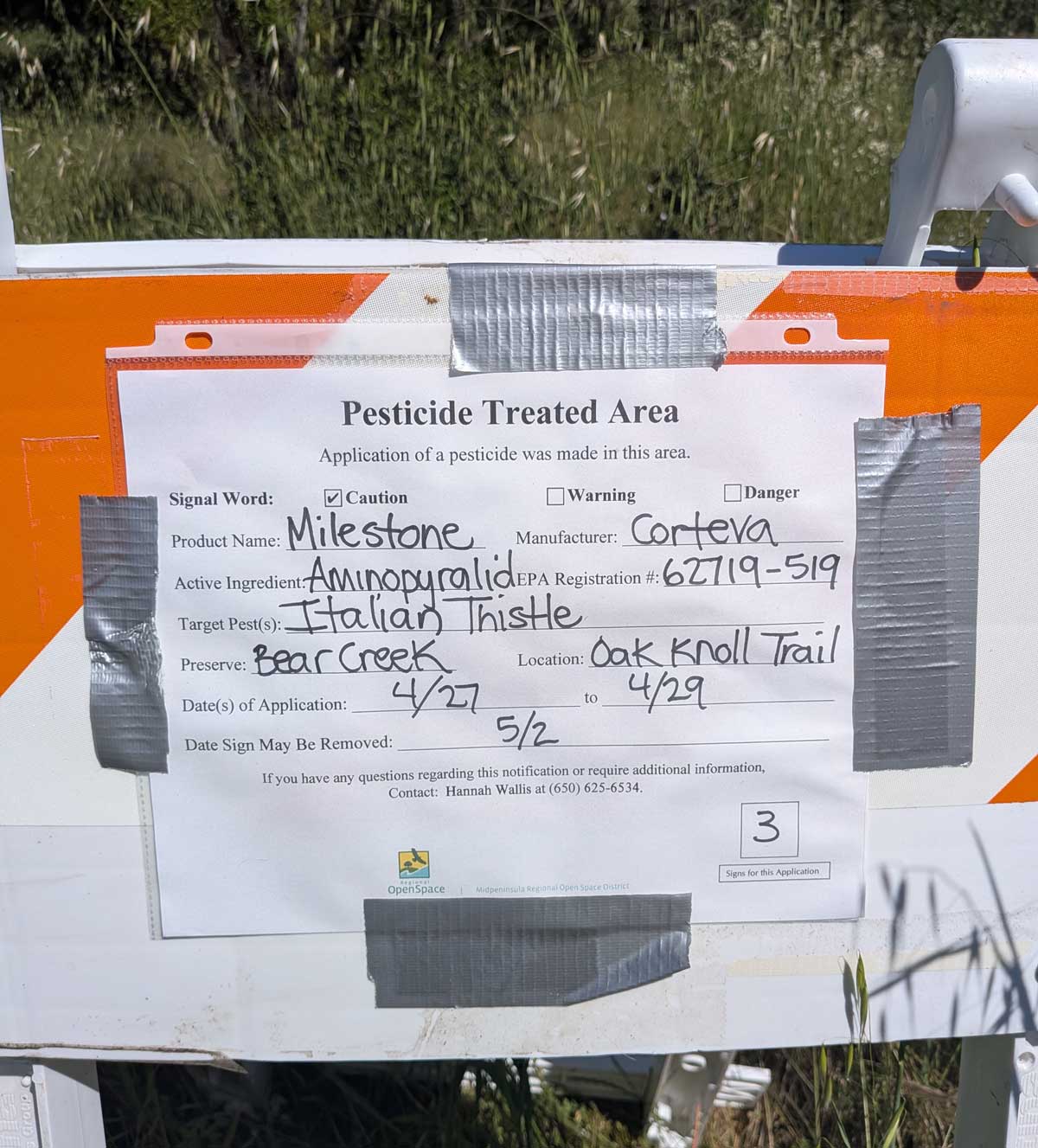
Midpen’s own planning documents further contradict the simplified stewardship narrative surrounding invasive species management. For example, a Midpen ecological report discussing yellow star-thistle management states:
“Mowing is not an effective control method because plants in the rosette stage generally grow below the height of a mower bar and because the robust taproot will resprout if top growth is removed.”
Other invasive species management guidance similarly warns that mowing yellow star-thistle can stimulate lower branching growth, reduce effectiveness, or increase seed production if timing and cutting height are not precise.
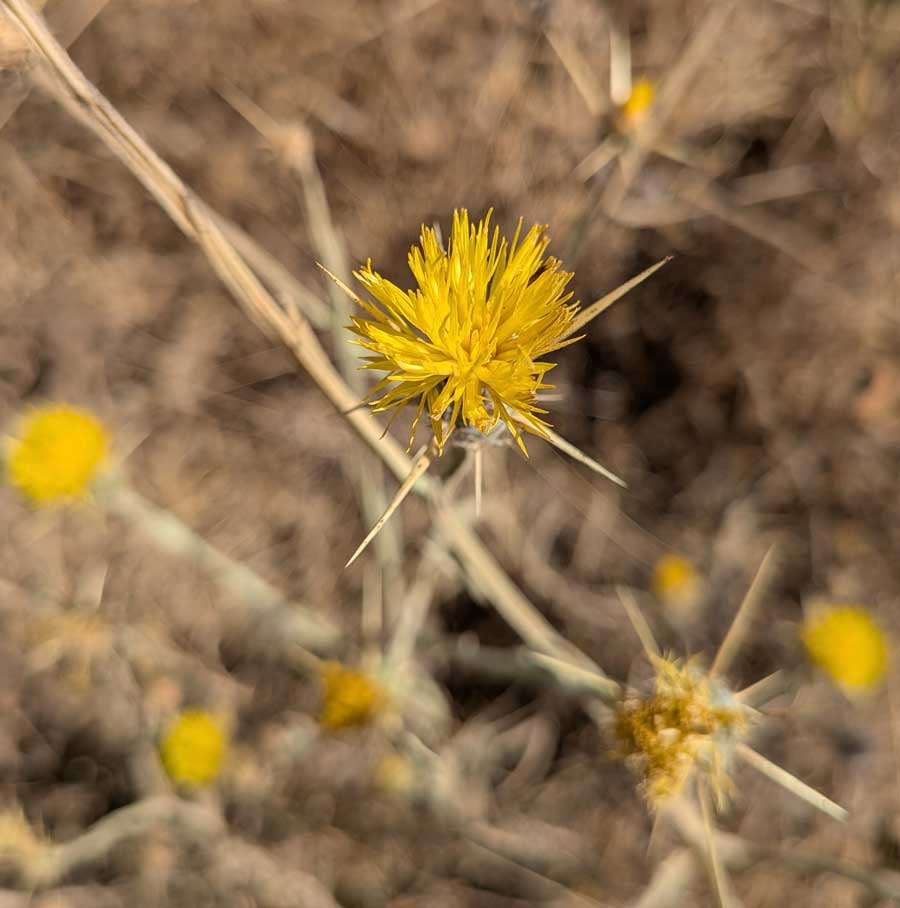
In other words, even Midpen’s own technical management documents acknowledge limitations and ecological tradeoffs largely absent from the simplified stewardship framing presented to the public.
Mowing in spring prevents native wildflowers from seeding
Many native wildflowers in the Santa Cruz Mountains are still actively flowering or setting seed during May. Broad mowing during this period therefore does not selectively remove only invasive vegetation.
It can also remove native annuals before seed production, cut down blooming wildflowers still being used by pollinators, and turn tall, varied spring vegetation into short uniform grass before many native plants have completed their reproductive cycle.
Guidance from nearby Santa Lucia Conservancy advises waiting to mow until wildflowers have produced and dispersed seed and until grassland bird nestlings have fledged, while recommending targeted spot-mowing for some invasive species rather than broad cutting across entire grasslands.
The meadow at Bear Creek still contained actively growing spring vegetation when it was cut, underscoring how broad mowing during this period affects far more than invasive weeds alone.
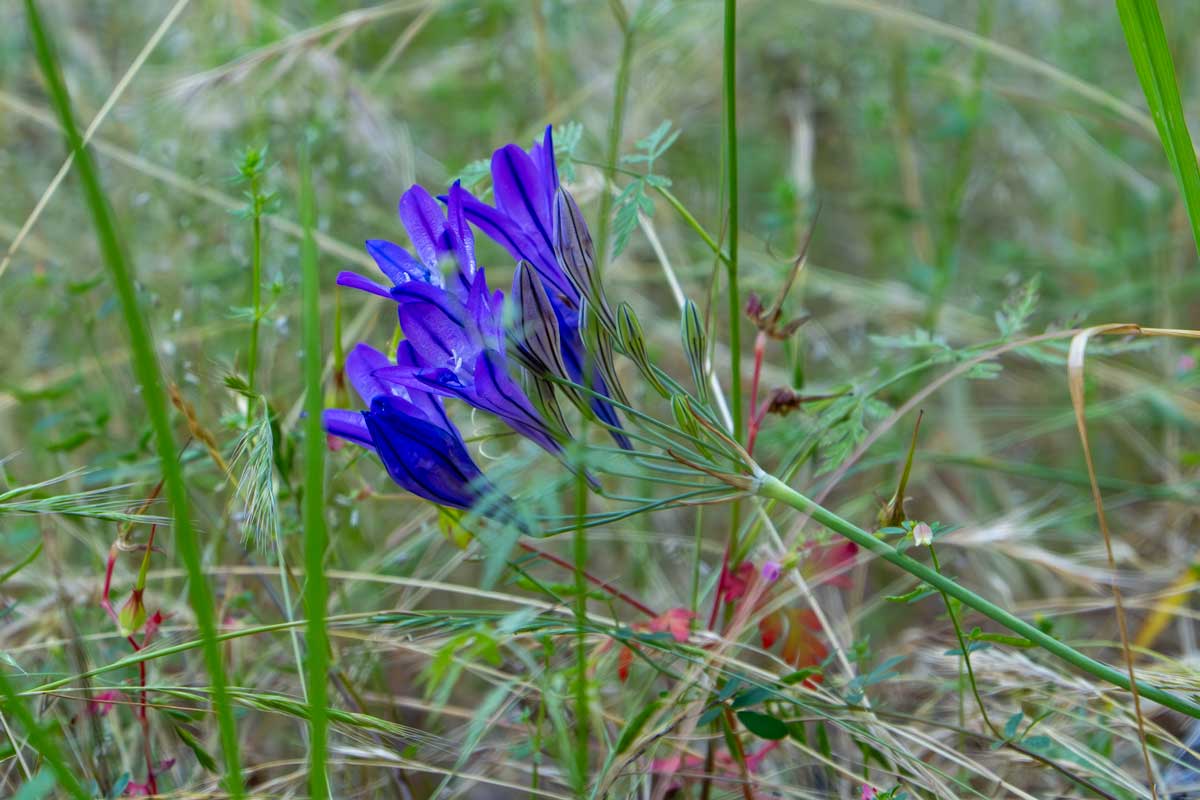
Those same late spring conditions also overlap directly with peak nesting season for many grassland birds.
The contradictions of Midpen’s ecological messaging
Taken together, these contradictions reveal a much larger problem with Midpen’s “Mowing to Mimic Nature” narrative. The stewardship article presented spring mowing as straightforward ecological management rooted in natural disturbance. Yet Midpen’s own planning documents, broader ecological research, and the biological realities of spring grasslands all point toward a far more complicated picture involving nesting-season sensitivity, invasive species uncertainty, habitat simplification, and significant ecological tradeoffs.
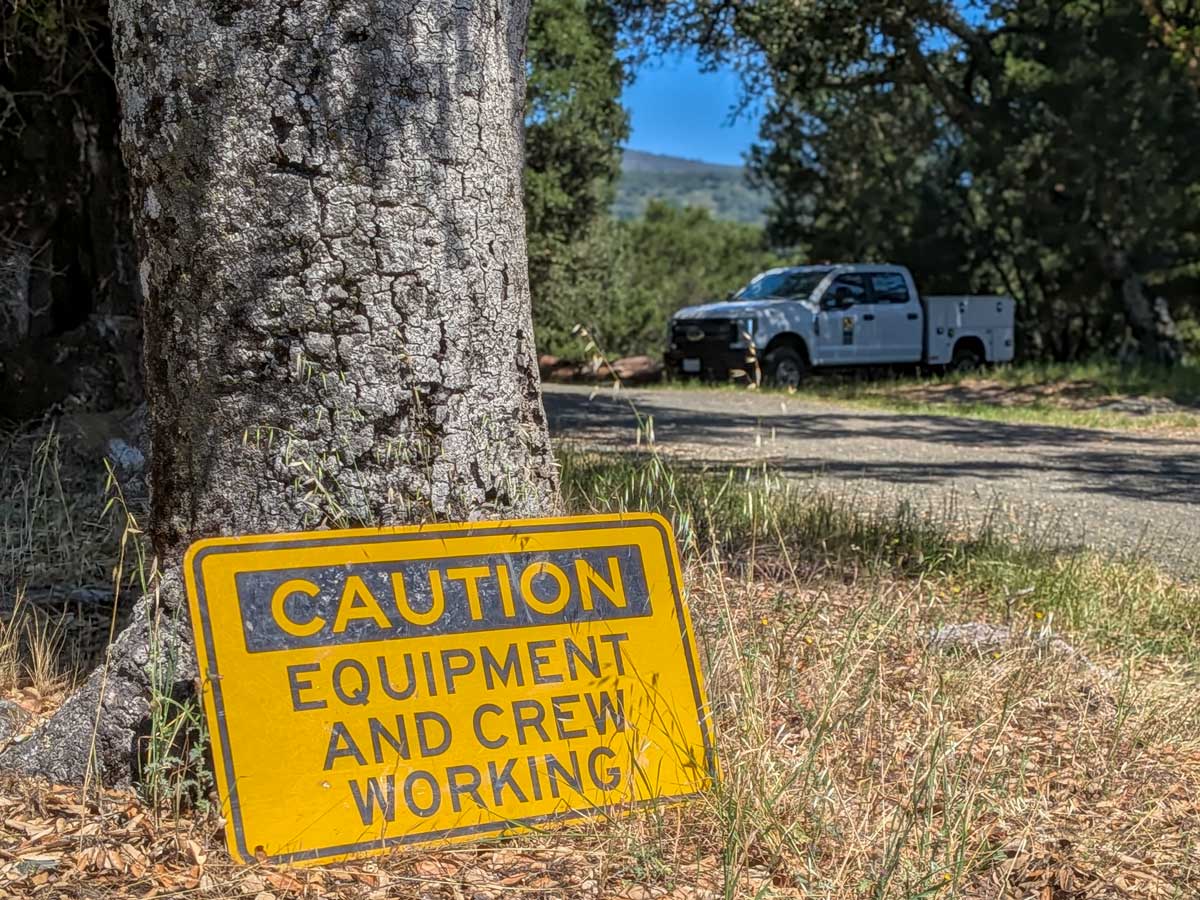
At Bear Creek Redwoods Preserve, the simplified stewardship narrative presented in “Mowing to Mimic Nature” looked very different once viewed against the biological realities of spring grasslands, where recently flattened meadow grasses, construction machinery, and ongoing vegetation removal had already altered the landscape during peak nesting season.
Midpen’s own stewardship messaging increasingly highlights this contradiction. In a separate restoration article about work in Sierra Azul Preserve, Midpen specifically emphasized completing vegetation work within a narrow seasonal window to avoid impacts to nesting birds and bats. That avoidance-first ecological framing stands in sharp contrast to the spring mowing and disturbance occurring at Bear Creek Redwoods during peak nesting season.
Next in this series: a closer look at two proposed construction projects at Bear Creek Redwoods Preserve during nesting season, and the growing tension between Midpen’s public emphasis on nesting bird avoidance and efforts to reduce protective nest buffers to allow construction activity to proceed during breeding season. Read the article: Midpen Open Space and the Harm of Repeat Disturbance
This article was first published on May 11, 2026 and has since been updated with new information.
References
“Timing Is Everything.” Midpeninsula Regional Open Space District, Midpeninsula Regional Open Space District, 2026, Midpen “Timing Is Everything” article.
Mindego Hill Rangeland Management Plan – Amendment 1 (August 2019), Midpeninsula Regional Open Space District.
United States Department of Agriculture Forest Service. Yellow Starthistle Field Guide. U.S. Forest Service, 2017, USFS Yellow Starthistle Field Guide PDF.
United States Geological Survey. Fire History of the San Francisco East Bay Region and Implications for Landscape Patterns. U.S. Geological Survey, USGS fire history publication.
