
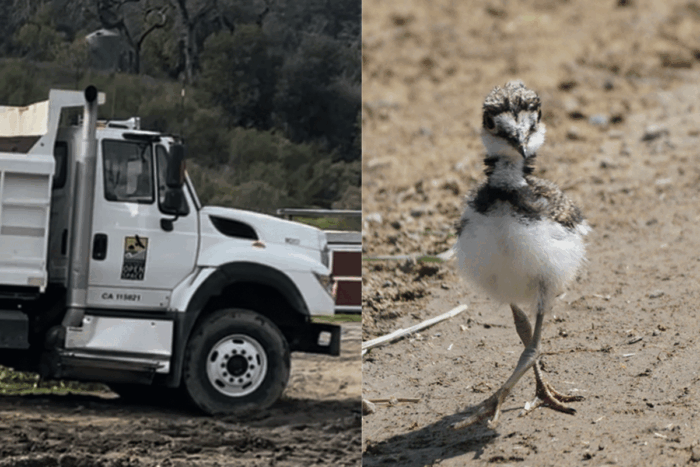
At Bear Creek Redwoods Open Space Preserve, repeated nesting season projects by Midpeninsula Regional Open Space District are altering habitat used by migratory birds.
The rush of spring migration at Bear Creek Stables is unlike anywhere else in Bear Creek Redwoods Preserve.
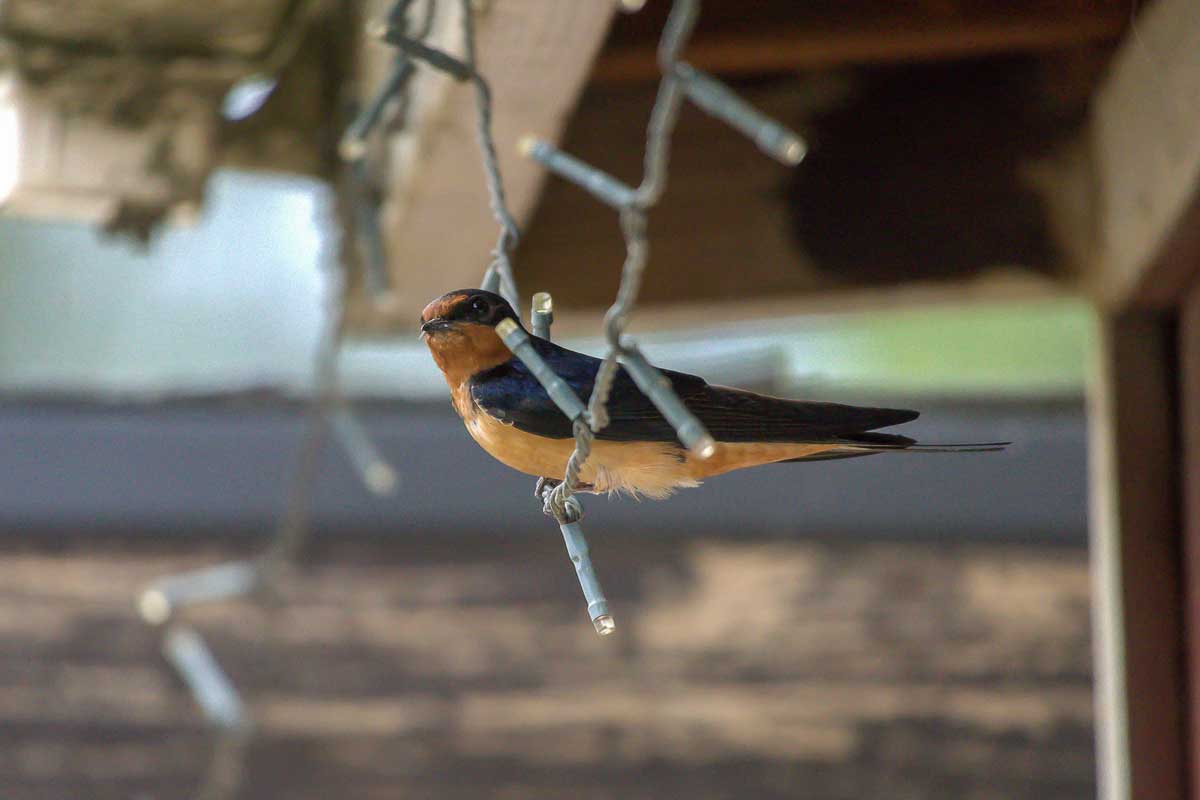
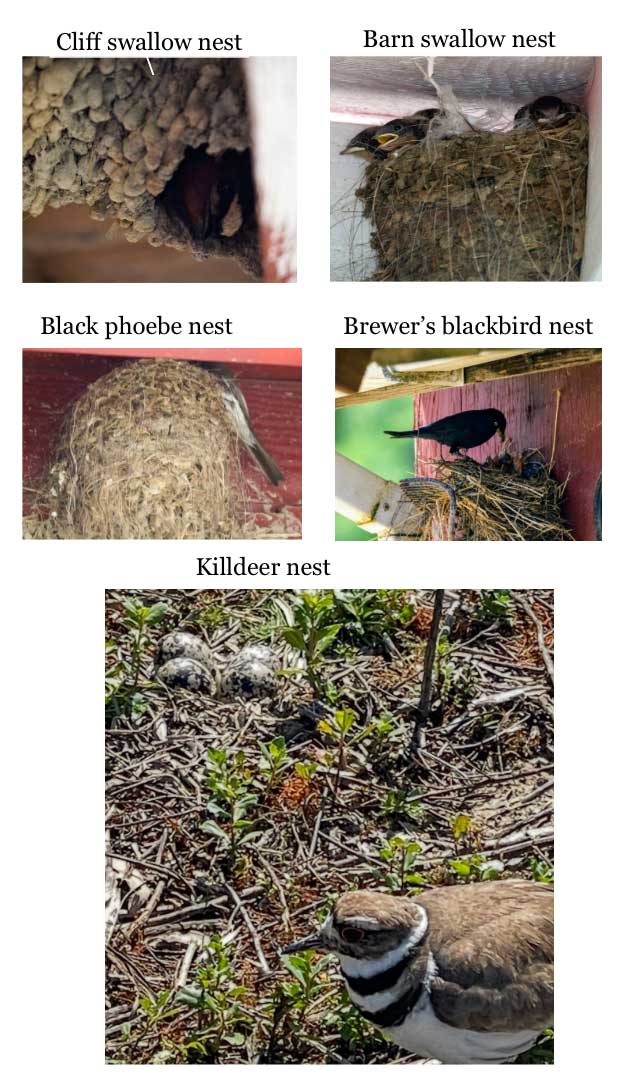
Barn swallows and cliff swallows sweep low across the stableyard before gathering mud from puddles and darting back beneath the eaves to repair generations-old nests. Brewer’s blackbirds descend into the stables in noisy flocks, males flashing iridescent feathers as they posture and display to females. In the Upper Arena, killdeer bow through courtship displays before scraping shallow nests directly into sandy and gravel-covered ground.
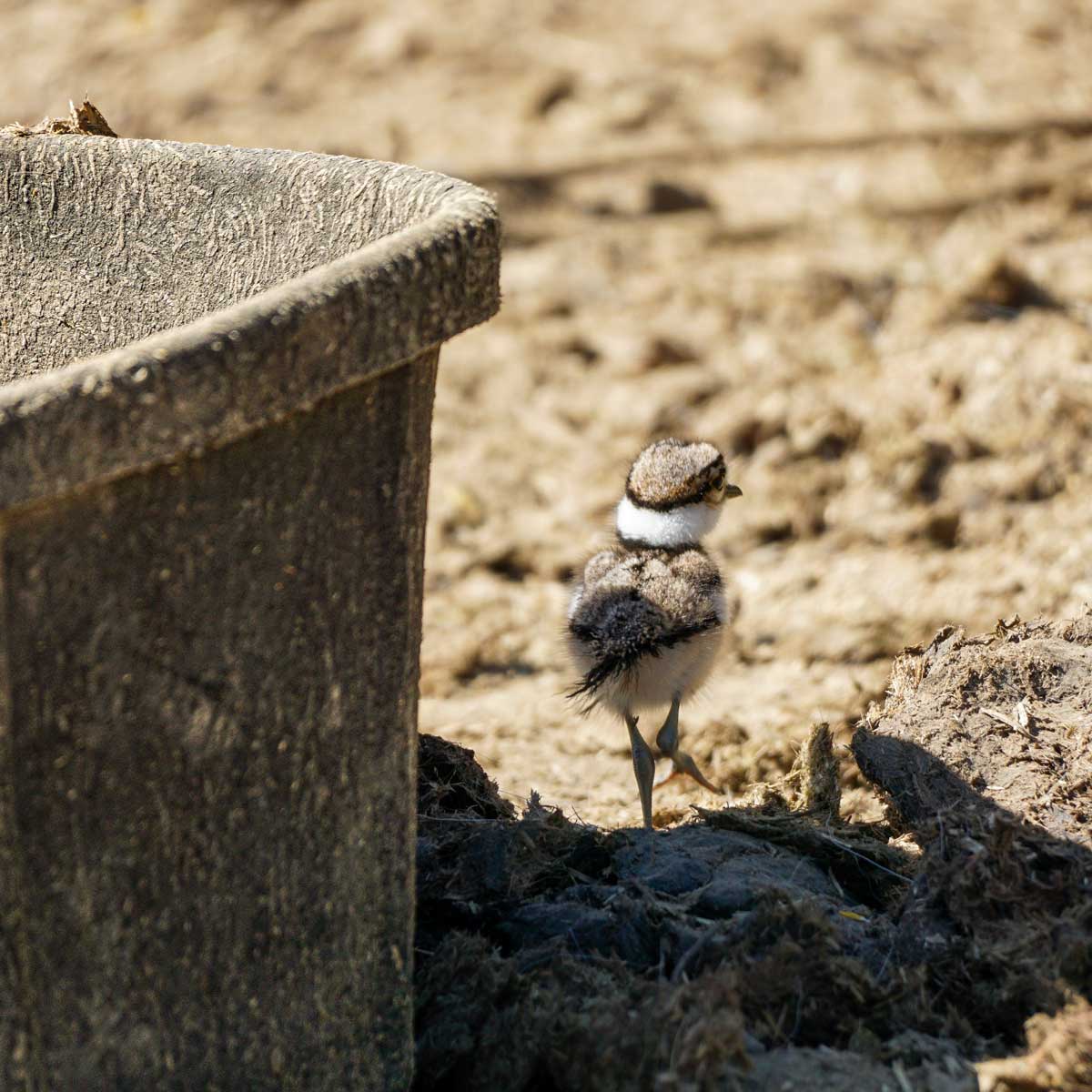
Over nearly a century, the stables became something distinct within Bear Creek Redwoods Open Space Preserve: a place where wildlife adapted to the historic horse facilities. Open gravel, puddles, barns, paddock edges, insects, and sheltered eaves created nesting habitat for federally protected migratory birds found nesting nowhere else in the preserve.
Midpen, a public natural resources agency, has pushed one nesting season project after another through the stables, demolishing stalls containing historic barn swallow nests the birds were expected to return to and stripping and altering vegetation from the hillside at the stables just as killdeer arrived each spring to breed.
Now Midpen is advancing a major arena reconstruction project beside active nesting areas while simultaneously altering the preserve’s only known killdeer nesting habitat by replacing the open soil conditions killdeer rely on with denser vegetation.
The ripple effect of repeat nesting season disturbance
The harm is not simply temporary disturbance. Many migratory birds return to the same breeding grounds year after year, a behavior known as site fidelity. When disruptive projects continue in the very areas those birds rely on for nesting, repeated nesting failures and gradual habitat degradation can reduce breeding activity over time rather than merely interrupting it for a single season.
Ecologists refer to this as a “biological trap.” Birds continue returning to places that historically supported successful nesting even as ongoing disturbance and habitat alteration make reproduction less successful year after year.
Midpen never seriously studied the impacts
Despite years of disturbance, habitat alteration, and construction activity, Midpen has never seriously studied how these cumulative impacts are affecting the migratory and resident native birds nesting at the stables.
Midpen does not even have an inventory of the native and migratory birds present at Bear Creek Stables. The 2006 biological report underpinning the 2017 Bear Creek Redwoods Environmental Impact Report classified the area, without ever surveying the stables, as:
“Barren (Built Up/Urban Disturbance)”
And only offered this hesitant conclusion:
“likely support nesting Barn Swallows and Black Phoebes.”
“Likely support” is astonishing language, given the highly visible nesting activity that has occurred at the stables for years. For a preserve area used year after year by federally protected migratory birds to breed and raise young, Midpen’s ecological understanding of the site remains remarkably thin for a natural resources agency.
In 2024, after the Ward 1 director approached me about the Bear Creek Stables Ad Hoc needing a stronger connection to the preserve’s natural environment, I provided that ecological context through a presentation documenting how migratory birds were actually using the stables (Read that presentation: Bear Creek Stables – Outdoor educational and docent opportunities).
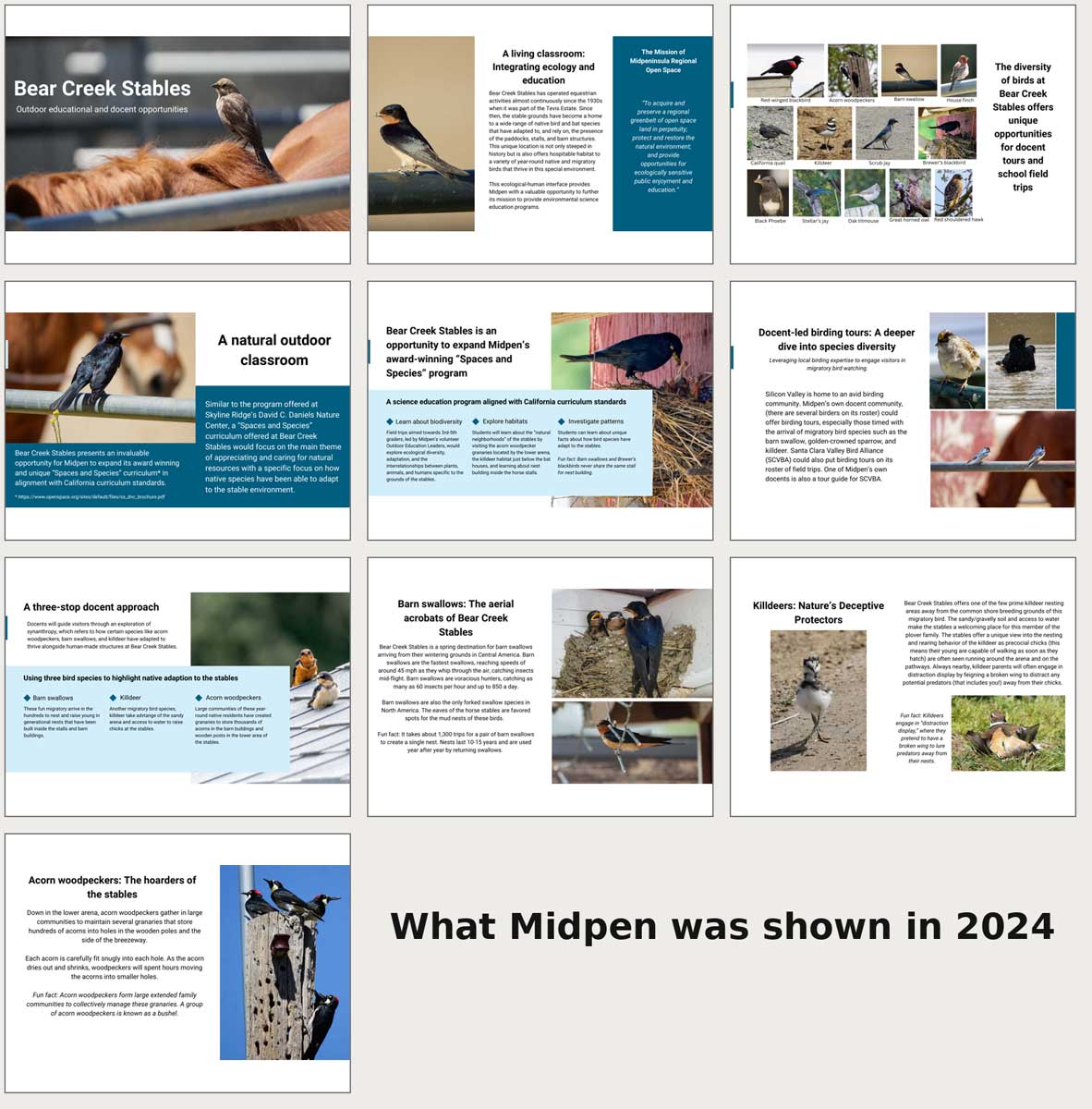
Even now, my presentation remains effectively the only site-specific documentation showing how migratory birds are using the stables as breeding habitat. Most of Midpen’s own planning documents focus almost entirely on infrastructure, facilities, and public use rather than the ecology of the birds nesting there.
A failure to understand cumulative harm
The disruptive nesting season projects carried out in 2024 should have been a turning point for Midpen, an opportunity to finally study how migratory birds were using the stables and reassess whether pushing construction and vegetation work through active breeding habitat was causing cumulative harm. Instead, the agency is now advancing another nesting season project beside the same remaining breeding areas, repeating the same pattern of limited on-the-ground biological analysis followed by disruptive work.
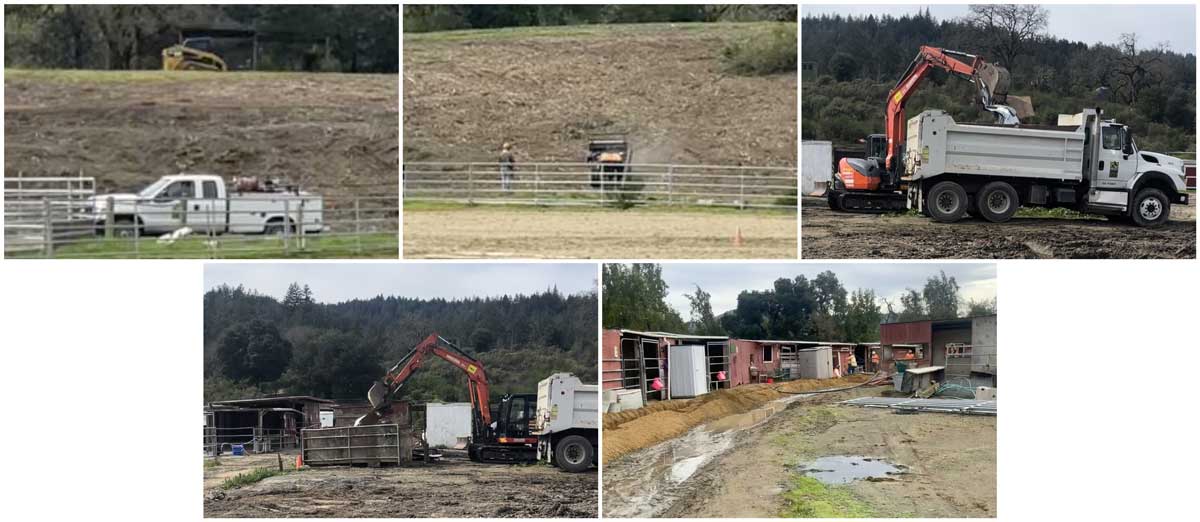
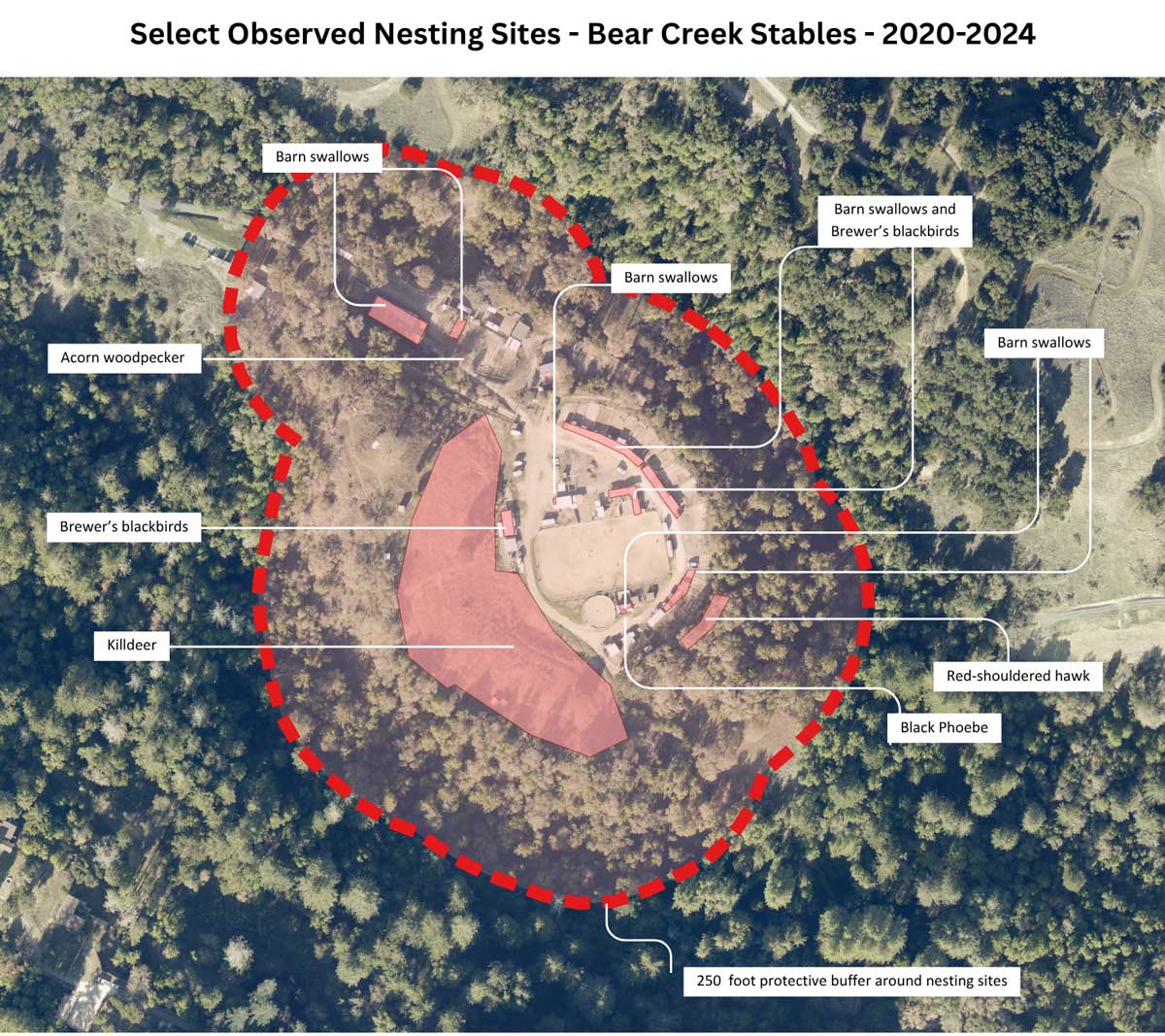
Midpen’s own policies and Best Management Practices require nesting bird surveys within 14 days of construction across both project areas and surrounding 250-foot buffers. Yet before vegetation removal and paddock demolition began at the stables in 2024, Midpen produced none of those required pre-disturbance surveys looking for active nests within the required 250-foot buffer zone.
Those requirements are not informal guidelines. They come from Midpen’s adopted Open Space Maintenance and Restoration Program (OSMRP), approved by the Midpen Board of Directors through Agenda Item R-21-126 in September 2021. The program established formal best management practices governing construction, vegetation management, restoration, and maintenance activities across Midpen preserves.
Among those adopted requirements is BMP BIO-17, “Migratory Bird Nest Protection Measures,” which requires focused nesting bird surveys within 15 days of project activities during nesting season, including surveys covering project sites, staging areas, and surrounding habitat buffers extending 250 feet for passerines, 500 feet for smaller raptors, and 1,000 feet for larger raptors. If active nests are found, Midpen’s own standards require protected “Ecologically Sensitive Areas” around nests until young have fledged.
Yet Midpen proceeded with the 2024 nesting season work at Bear Creek Stables without producing the kind of focused pre-disturbance survey documentation its own adopted framework describes. These are the protections Midpen publicly cites when assuring the public that wildlife impacts are being minimized.
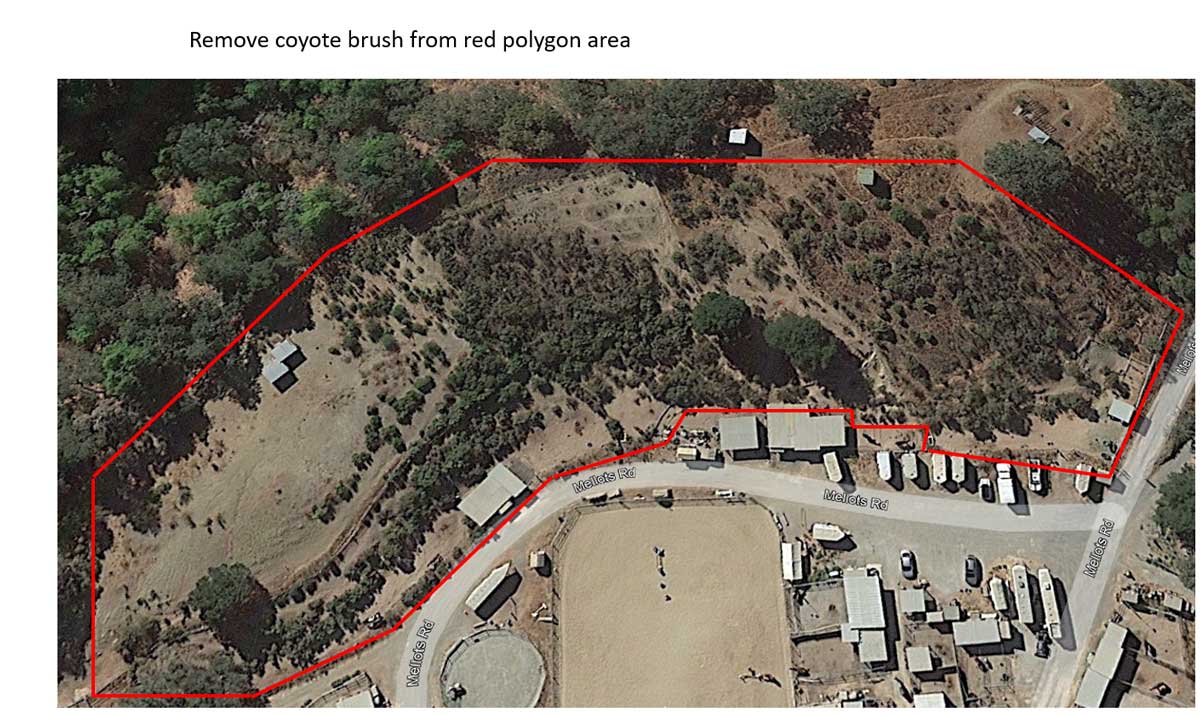
The agency’s pre-project analysis for the 2024 vegetation removal largely amounted to a map with a red polygon labeled:
“Remove coyote brush from red polygon area.”
When concerns were raised about the lack of local ecological data surrounding yet another planned 2026 nesting season project, the proposed north parking lot construction at Bear Creek Redwoods Preserve, Midpen again defended the absence of site-specific studies instead of conducting them. Rather than first carrying out site-specific biological research to determine what nesting bird species were actually using the preserve and how they were responding to ongoing habitat disturbance, the agency continued relying largely on broad statewide datasets, older baseline studies, generalized assumptions, and procedural checklists.
That approach is especially problematic given that the biodiversity database Midpen cited was never intended to substitute for site-level biological surveys. The California Department of Fish and Wildlife, which maintains this database, cautions that its mapped occurrence polygons represent estimated spatial accuracy rather than exact habitat boundaries, and because it is a presence-only database, the absence of records does not mean species are absent from an area that has never been comprehensively surveyed.
Meanwhile, construction and habitat alteration continue moving through areas of Bear Creek Redwoods Preserve at the same time birds are nesting.
Managing the birds instead of the disturbance
Brian Malone stated at a February 2026 public meeting:
“the birds aren’t nesting in the arena area”
Brian Malone’s statement ignores the fact that killdeer historically nest throughout the gravel and sandy habitat surrounding the arena, while swallows and blackbirds nest on stable structures immediately adjacent to the Upper Arena.
As vegetation removal and ongoing disturbance reduced nesting habitat around the stables, the Upper Arena became one of the few remaining areas that still resembled the open gravel and sandy conditions killdeer rely on for nesting rather than roads, active paddocks, or heavily trafficked areas.
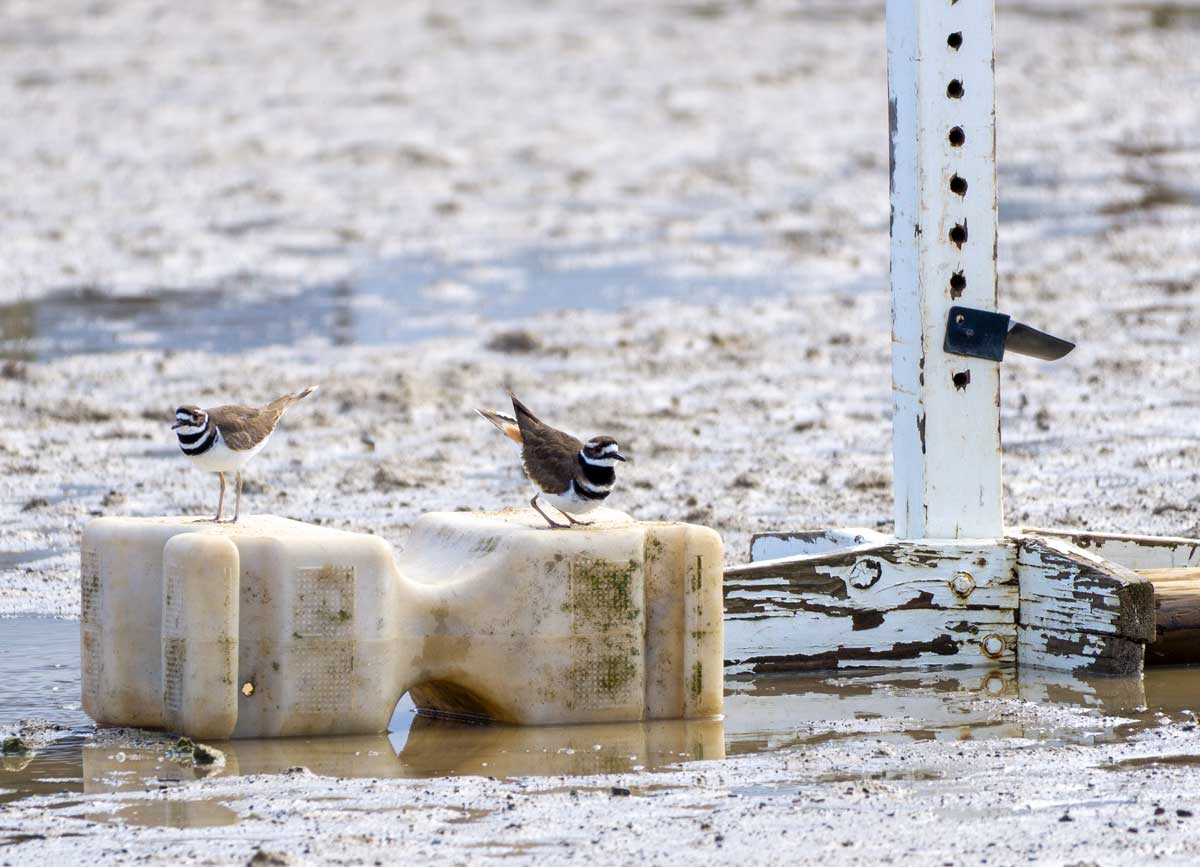
The use of “passive hazing” to stop birds from nesting
Midpen removed portions of the open sandy hillside habitat above the arena that killdeer had been using for nesting through an ongoing revegetation project scheduled to continue through 2027. During the early nesting season, boarders began observing killdeer inside the Upper Arena, which had remained locked and unused since August 2025. Midpen’s response was to use regular human presence inside the arena, a form of passive hazing, to discourage the birds from establishing nests there as well. In effect, the birds were displaced from one habitat and then discouraged from using the only remaining suitable alternative.
Federal wildlife guidance allows agencies to use non-lethal “passive hazing” before nesting begins, using sustained human presence and disturbance to discourage birds from establishing nests in future construction areas.
The absence of nests inside the arena may simply mean Midpen’s passive hazing worked.
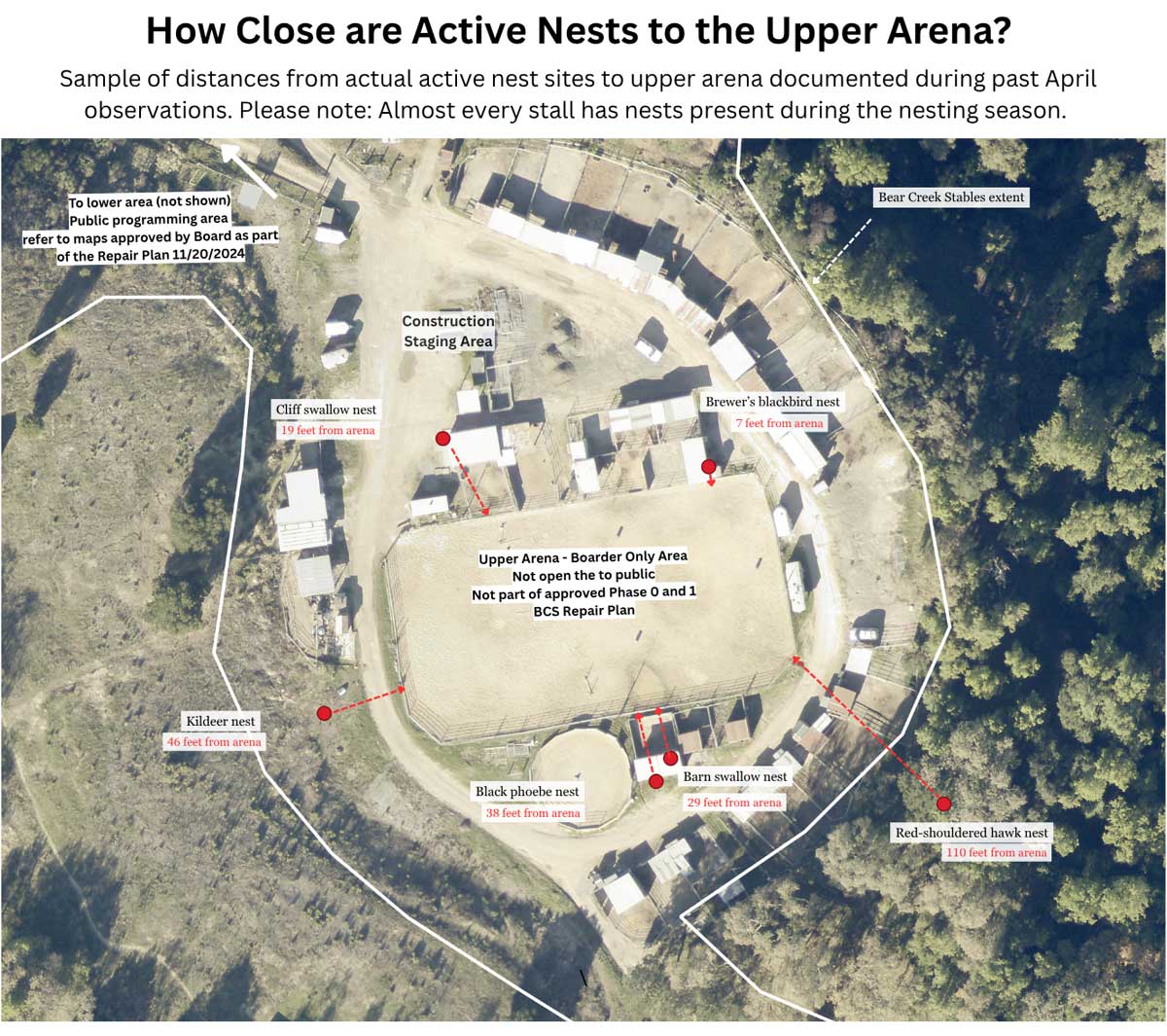
250 foot buffers are what protect birds from construction activity, not monitoring
Assistant General Manager Brian Malone also proposed reducing protective nest buffers for swallows while relying instead on biological monitoring during active construction, even though monitoring birds while disturbance is happening is not mitigation because there is no invisible barrier separating nesting birds from grading equipment, vibration, and construction trucks.
Instead of asking whether construction should occur beside active nests during breeding season at all, Midpen increasingly treats the birds themselves as the obstacle to the project, claiming heavy grading equipment operating beside active nests poses little risk to breeding birds despite the lack of site-specific studies supporting that conclusion.
This Upper Arena construction project is not what the Board approved
At a November 2024 public meeting, the Midpen Board approved a public-benefit vision centered on the lower stables, including educational areas, gathering spaces, visitor circulation routes, and public programming. Staff later shifted project priorities uphill into the private boarder area without returning for equivalent Board-level review, even as unresolved safety deficiencies, ADA issues, and fire regulation concerns remained in the actual public-use areas where children and visitors are expected to gather.
The upper arena was never approved by the Board as part of the public programming area, yet Midpen is now directing substantial public spending and construction activity there instead of addressing deficiencies within the approved public-use areas.
The all-volunteer Bear Creek Stables Ad Hoc Committee spent hundreds of hours carefully defining a public programming area intended to balance habitat concerns, visitor access, and stable operations. Midpen staff later redrew the boundaries themselves to pull a private operational area into the project footprint anyway, while the Board largely sat silent as staff unraveled months of committee work and the public process that produced it.
The shift is visible in Midpen’s own maps. The comparison below pairs an annotated Santa Clara County aerial, created to highlight the original Ad Hoc planning area, against the revised program boundary later introduced by Assistant General Manager Brian Malone.
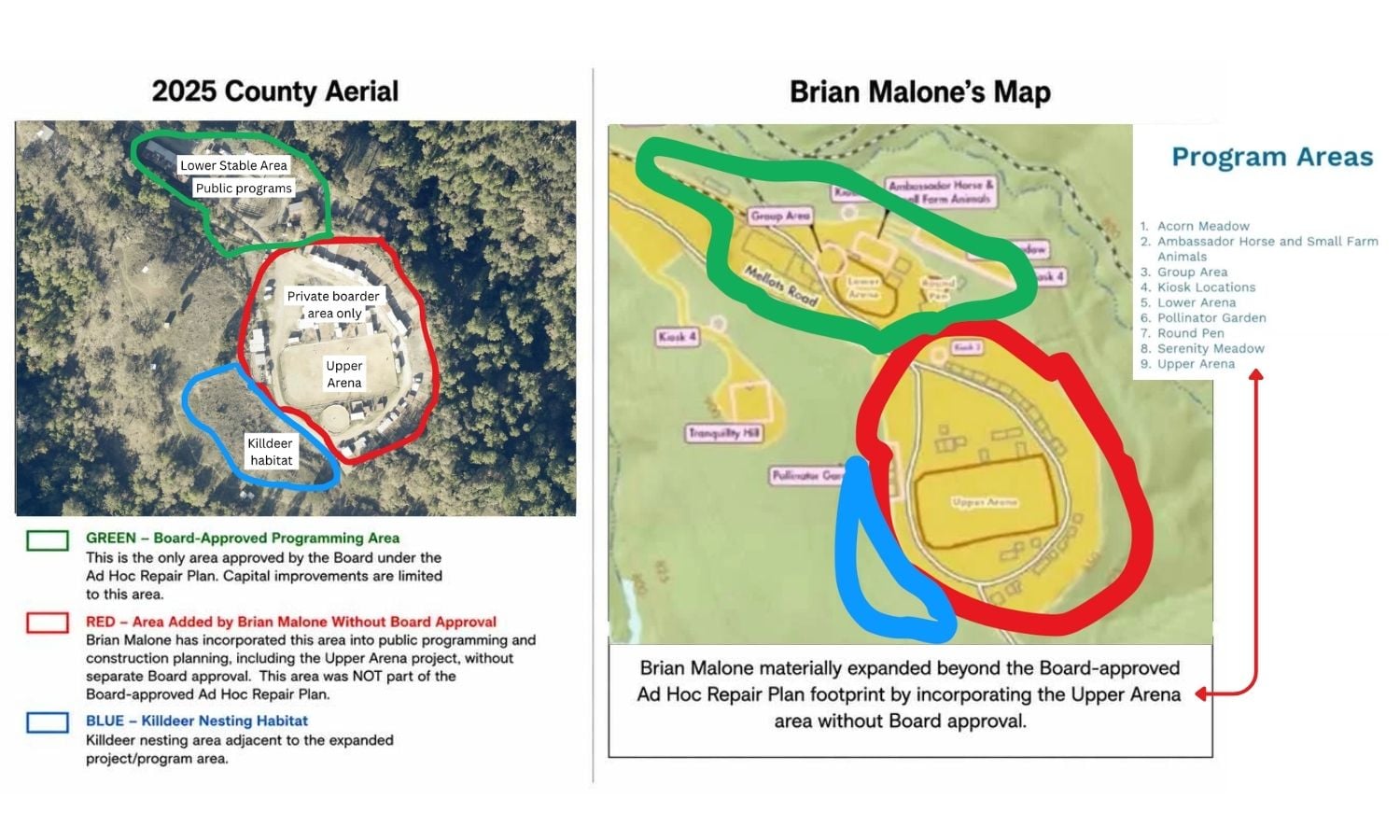
Instead of addressing safety issues and deficiencies within the Board-approved public-use areas, Midpen concentrated major construction activity in the upper arena, a private operational area that had sat locked and unused for roughly ten months even though the only Board-approved public programming area is in the lower stable area.
The Board was told this was a “minor one-day repair”
The way the project was publicly described to the Board only deepened the disconnect between what directors were told and what the bid documents actually revealed. When Midpen staff described the Upper Arena project to the Board in February 2026, Assistant General Manager Brian Malone publicly called it:
“a one-day project”
The bid solicitation for the arena construction project tells a very different story.
The RFB instead describes a 27,000-square-foot reconstruction project involving grading, laser leveling, sand removal, and heavy equipment operations, and the deeper you read into the bid package, the more troubling the project structure becomes.
The contract award is based on the ‘Total Base Bid.’ Yet the RFB removes known project costs tied to contaminated sand handling, disposal, grading, and replacement footing material from the number used to publicly frame the project.
Midpen already knew those costs existed because the nonprofit operator warned them directly, yet the public still sees a project number that stays under the $53,000 threshold requiring General Manager Ana Ruiz to bring the project before the Board even though the RFB itself describes a much larger reconstruction effort with major costs sitting outside the headline number.
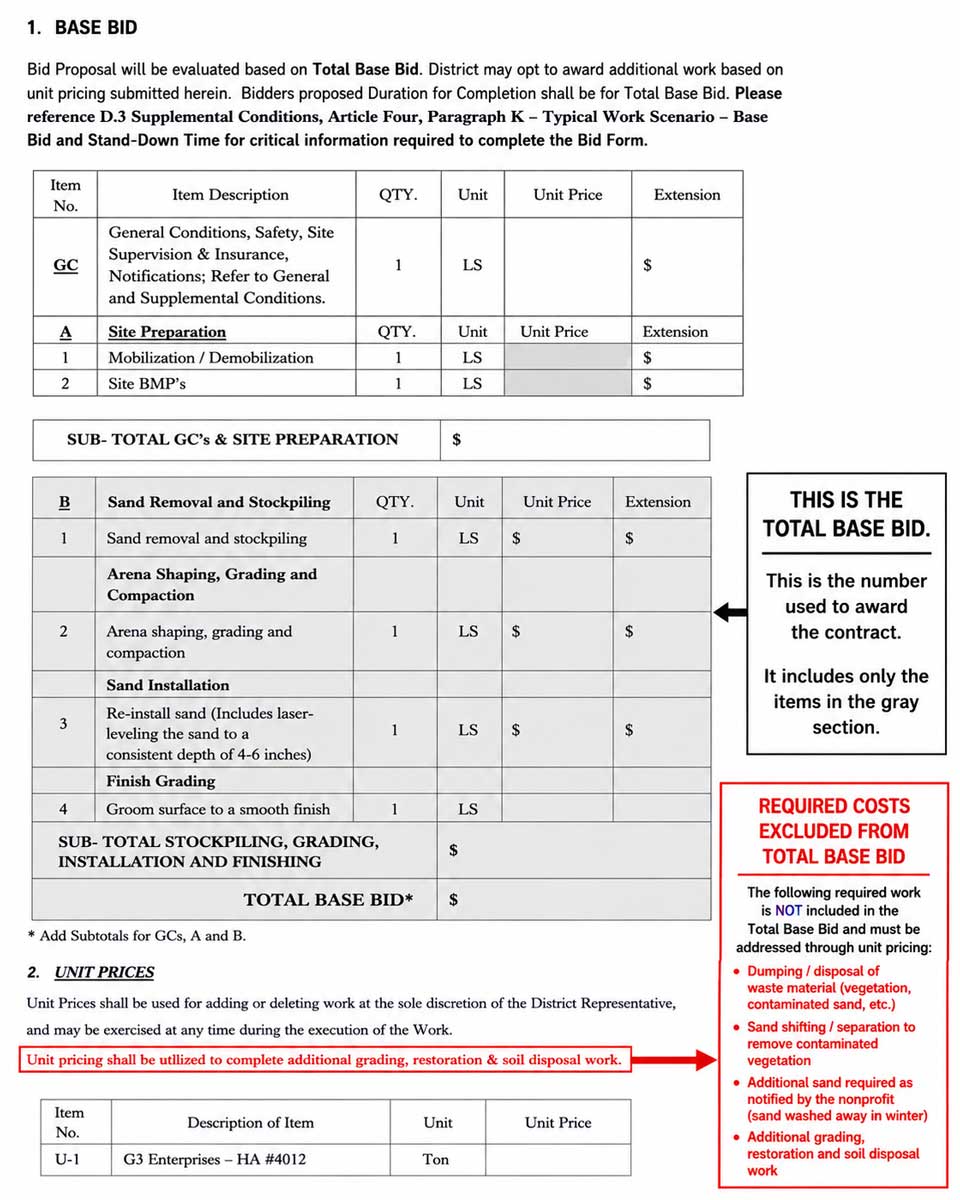
Before the deadline to correct the RFB expired, detailed public questions asked Midpen how contractors were supposed to price those known required costs when they sat outside the number used for contract award and public visibility. Midpen answered none of them, and the deadline passed without Midpen correcting the bid structure, clarifying the pricing, or responding to a single public question.
A major reconstruction project now moves forward while the visible project cost remains low enough to avoid deeper Board review and public scrutiny.
Update – May 19, 2026: After this article was published, Midpen substantially revised the active Upper Arena bid solicitation. The revised addendum expanded the technical scope of the project, raised the estimated project cost by 25%, added revised grading and compaction specifications, introduced new contract requirements, and pushed the project schedule into July.
The revised documents also revealed that contractors were submitting technical questions and recommendations outside the public BidNet question process while Midpen left the public BidNet questions unanswered.
Despite the revisions, there are still major deficiencies with the bid solicitation. Pushing the project schedule into July still places the work squarely within nesting season, and barn swallows at Bear Creek Stables routinely produce multiple broods extending well into August based on my own multi-year field observations and documentation.
Wildlife protection on paper, disturbance on the ground
As criticism grew over proposed nesting season construction, Midpen added a wildlife-protection section to the Bear Creek Stables project webpage. A photograph of great horned owls taken at a different preserve (Rancho San Antonio) appeared beside promises about stewardship and wildlife protection.
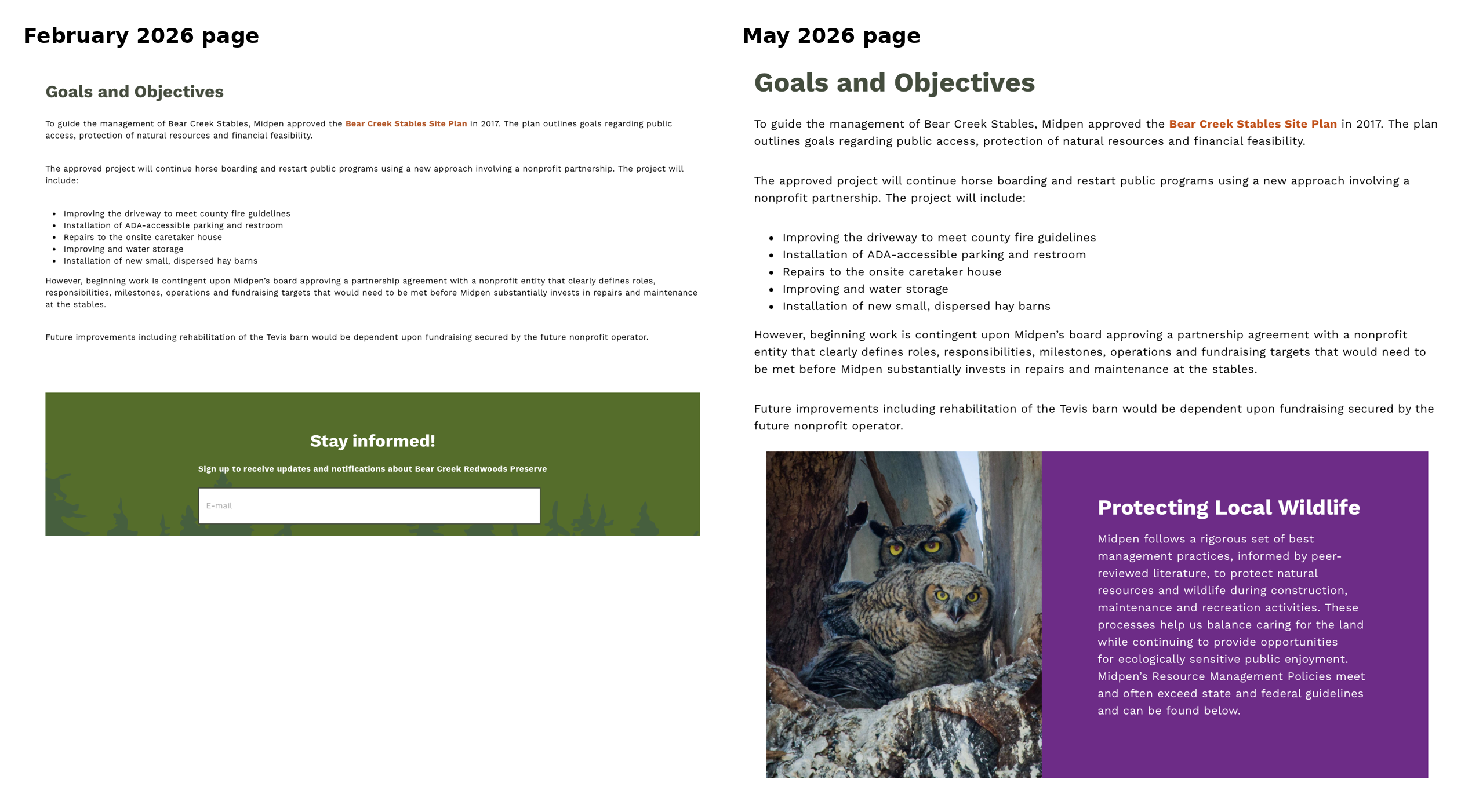
Wildlife protection is not measured by what an agency says on a webpage. It is measured by whether those protections are actually applied when projects move into sensitive habitat. Midpen’s own adopted BMP framework requires focused nesting bird surveys, protected nest buffers, and designation of active nest areas as “Ecologically Sensitive Areas” during construction activities. At Bear Creek Stables, however, Midpen proceeded with nesting season projects without producing the kind of focused surveys, buffer documentation, and visible protective measures its own adopted framework describes.
Midpen promises the public:
“Midpen follows a rigorous set of best management practices, informed by peer-reviewed literature, to protect natural resources and wildlife during construction, maintenance and recreation activities.”
The agency also promises:
“These processes help us balance caring for the land while continuing to provide opportunities for ecologically sensitive public enjoyment.”
The stewardship language on the webpage doesn’t line up with what has been happening on the ground at the stables over the last few years.
Midpen bans e-bikes on most preserve trails in part because of concerns that incidental noise could disturb wildlife. Yet at Bear Creek Stables, the agency now expects the public to accept heavy grading equipment operating beside active nesting birds as environmentally insignificant.
Public records also show the nesting bird surveys conducted during the 2024 paddock demolition and vegetation removal failed to meet Midpen’s own policies and survey requirements.
Warnings in 2024 about barn swallow nesting activity and killdeer breeding locations failed to stop the work even though these were exactly the kinds of activities Midpen publicly claims it tries to avoid during nesting season, and none of the projects were urgent.
In February 2024, video documented ongoing paddock demolition as metal pipe panels were crushed apart and loaded into a dump truck marked with the Midpen logo. Weeks later, vegetation removal took over the sandy hillsides at the exact time killdeer normally begin nesting there. The only evidence of biological impacts came from observations by boarders showing killdeer nesting was delayed by roughly five weeks following the 2024 disruptions.
Research shows barn swallows using long-established nests often breed earlier and more successfully, meaning the removal of those stalls in 2024 containing nests disrupted swallow nesting.
Midpen is once again ignoring warnings in 2026 over planned arena construction during nesting season.
In migratory birds, the effects of multiple disrupted nesting seasons carry into future years because delayed nesting means fewer chicks surviving and fewer birds returning in future years.
That is how biological traps form, with birds continuing to return to breeding grounds that no longer reliably support successful nesting until those breeding grounds slowly fall silent.
This article was originally published on May 18, 2026 at 5:28am PST and has since been updated to reflect updated bid solicitation documents for the Bear Creek Stables public works project.
Related:
- Bear Creek Stables Manager Charged With Animal Cruelty
- Midpen Open Space did THIS during nesting season
- Timing Matters: Spring Mowing, Nesting Birds, and Native Wildflowers at Bear Creek Redwoods Preserve
References
Midpeninsula Regional Open Space District. 2022. Resource Management Policies. Revised January 2022. https://www.openspace.org/sites/default/files/Resource_Management_Policies.pdf
Midpeninsula Regional Open Space District. 2017. Bear Creek Redwoods Preserve Plan Final Environmental Impact Report. January 2017. https://www.openspace.org/sites/default/files/20170124.BCRPreservePlanFEIR_0.pdf
Midpeninsula Regional Open Space District. 2021. Open Space Maintenance and Restoration Program CEQA Review and Adoption. Agenda Item R-21-126. September 22, 2021. https://www.openspace.org/sites/default/files/20210922_OSMRP-CEQA_R-21-126.pdf
Midpeninsula Regional Open Space District. 2021. Open Space Maintenance and Restoration Program Manual: Final IS/MND Appendices. September 2021. https://www.openspace.org/sites/default/files/Final%20Midpen_Final_ISMND_Appendices_Sept2021web.pdf
H. T. Harvey & Associates. 2006. Bear Creek Redwoods Open Space Preserve Special-Status Wildlife Review. Prepared for Midpeninsula Regional Open Space District. October 12, 2006. (Redacted version available through Geography Realm.)
Midpeninsula Regional Open Space District. 2022. Electric Bicycle (E-Bike) Policy Evaluation. Report No. R-22-78. June 29, 2022. https://www.openspace.org/sites/default/files/20220629_EbikesStudy_R-22-78.pdf
H. T. Harvey & Associates. 2021. Analysis of E-bike Noise and Recommendations for Buffer Distances between Bike Trails and Bat Roosts/Nesting Birds. Prepared for Midpeninsula Regional Open Space District. September 17, 2021. https://www.openspace.org/sites/default/files/E-bike_noise-analysis_09172021.pdf
Brown, Charles R., and Mary Bomberger Brown. 1996. Coloniality in the Cliff Swallow: The Effect of Group Size on Social Behavior. Chicago: University of Chicago Press.
California Department of Fish and Wildlife. California Natural Diversity Database (CNDDB).https://wildlife.ca.gov/Data/CNDDB
California Department of Fish and Wildlife. 2012. Staff Report on Burrowing Owl Mitigation. State of California. https://nrm.dfg.ca.gov/FileHandler.ashx?DocumentID=83843
California Department of Transportation. 2016. Effects of Traffic Noise and Road Construction Noise on Birds. State of California. https://dot.ca.gov/-/media/dot-media/programs/environmental-analysis/documents/env/noise-effects-on-birds-jun-2016-a11y.pdf
Cornell Lab of Ornithology. “Killdeer Life History.” All About Birds. Cornell University. https://www.allaboutbirds.org/guide/Killdeer/lifehistory
Mass Audubon. Barn Swallow Nesting Biology at Bri Mar Stable. https://www.massaudubon.org/content/download/38939/file/Barn-Swallow-Nesting-Biology_Nov2019_FINAL.pdf
Safran, Rebecca J. 2004. “Nest-Site Selection, Predation, and Reproductive Success in the Barn Swallow.” The Auk 121(2): 445–456. https://doi.org/10.1139/z06-176
Safran, Rebecca J. 2006. “Nest-site Selection in the Barn Swallow, Hirundo rustica: What Predicts Seasonal Reproductive Success?” Canadian Journal of Zoology 84(11): 1533–1539. https://doi.org/10.1139/Z06-176
Shields, William M. 1984. “Factors Affecting Nest and Site Fidelity in Adirondack Barn Swallows (Hirundo rustica).” The Auk 101(4): 780–789. https://doi.org/10.2307/4086904
U.S. Fish and Wildlife Service. Avoidance and Minimization Measures for Migratory Birds. U.S. Department of the Interior. https://www.fws.gov/media/nationwide-avoidance-minimization-measures-birds
U.S. Fish and Wildlife Service. Migratory Bird Treaty Act. https://www.fws.gov/law/migratory-bird-treaty-act-1918
