

As the weather shifts toward winter, deciduous trees begin shedding their leaves. After changing from green to shades of yellow, orange, and red, the leaves eventually fall away, exposing branches that were hidden throughout the growing season.
Deciduous trees drop their leaves to conserve water and survive the colder months. Without foliage, they require less water and are better able to withstand winter winds.
With the leaves gone, the secret hideaways of squirrels are revealed. If you’ve ever noticed a clump of leaves and twigs tucked high in the branches of a tree during fall or winter, you’re probably looking at a squirrel nest known as a drey.

What is a squirrel drey?
Dreys are nests built by tree squirrels from leaves, twigs, moss, bark, and sometimes fur. Built where several branches meet, a drey has a woven outer shell surrounding a hollow interior that provides shelter from the weather, protection from predators, and a safe place to sleep and raise young.
Most squirrels build their own dreys, collecting leaves, twigs, moss, bark, and other natural materials one piece at a time. Unlike many birds, squirrels don’t weave nests. Instead, they pack and shape these materials into a dense, insulated shelter.
Squirrels are also opportunistic and will sometimes take over an abandoned drey, making repairs or adding fresh nesting material before moving in. A single squirrel may maintain several dreys within its home range, using different nests for sleeping, escaping predators, or raising young.
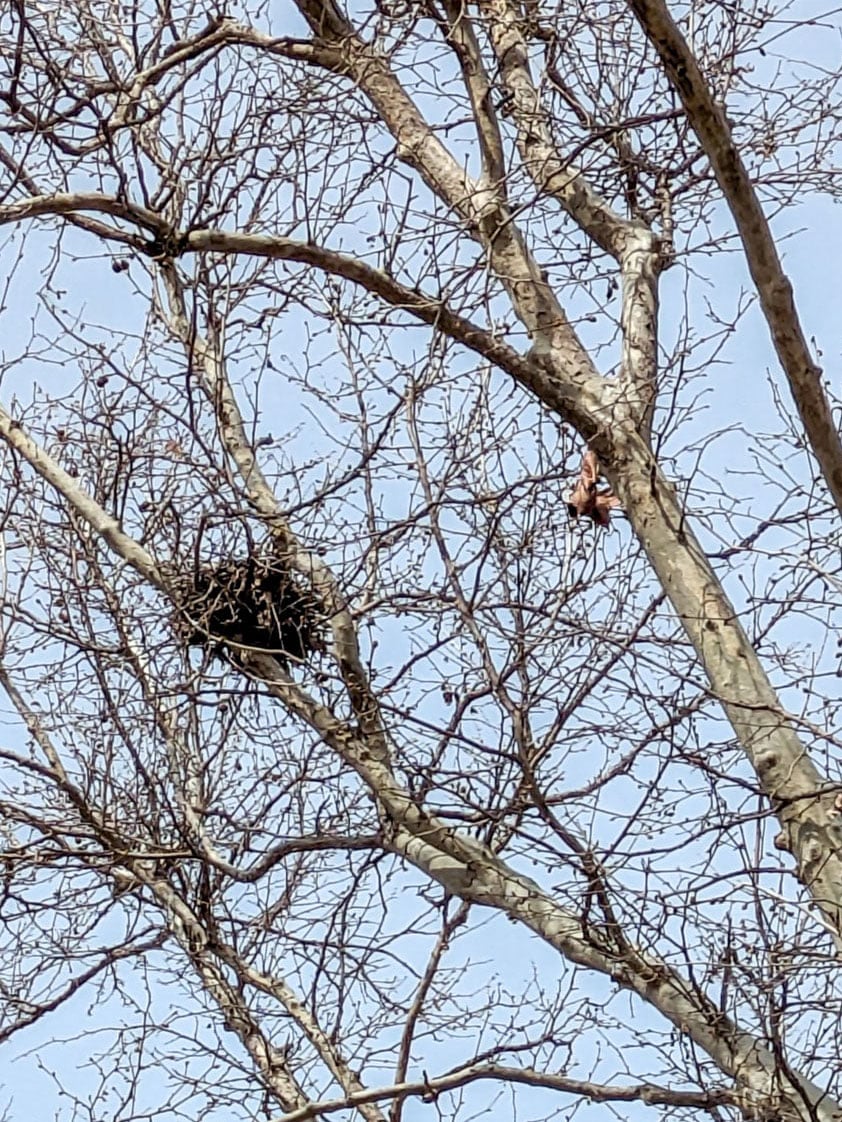
Squirrels also create nests from dens
Dreys are not the only nests used by squirrels. Many tree squirrels also shelter in natural tree cavities, known as dens, lining them with leaves, moss, fur, and other soft materials for warmth and comfort.
Types of dreys
University of Edinburgh biologist Andy Tittensor noted that there are two types of dreys. One type is a temporary drey, a shallow, saucer-shaped nest that often lacks a roof. Squirrels use these open nests during the warmer months for resting and staying cool in the shade. The second type is a permanent drey. Fully enclosed with one or more small entrances, it provides year-round shelter and is commonly used for sleeping, raising young, and protection from the weather.
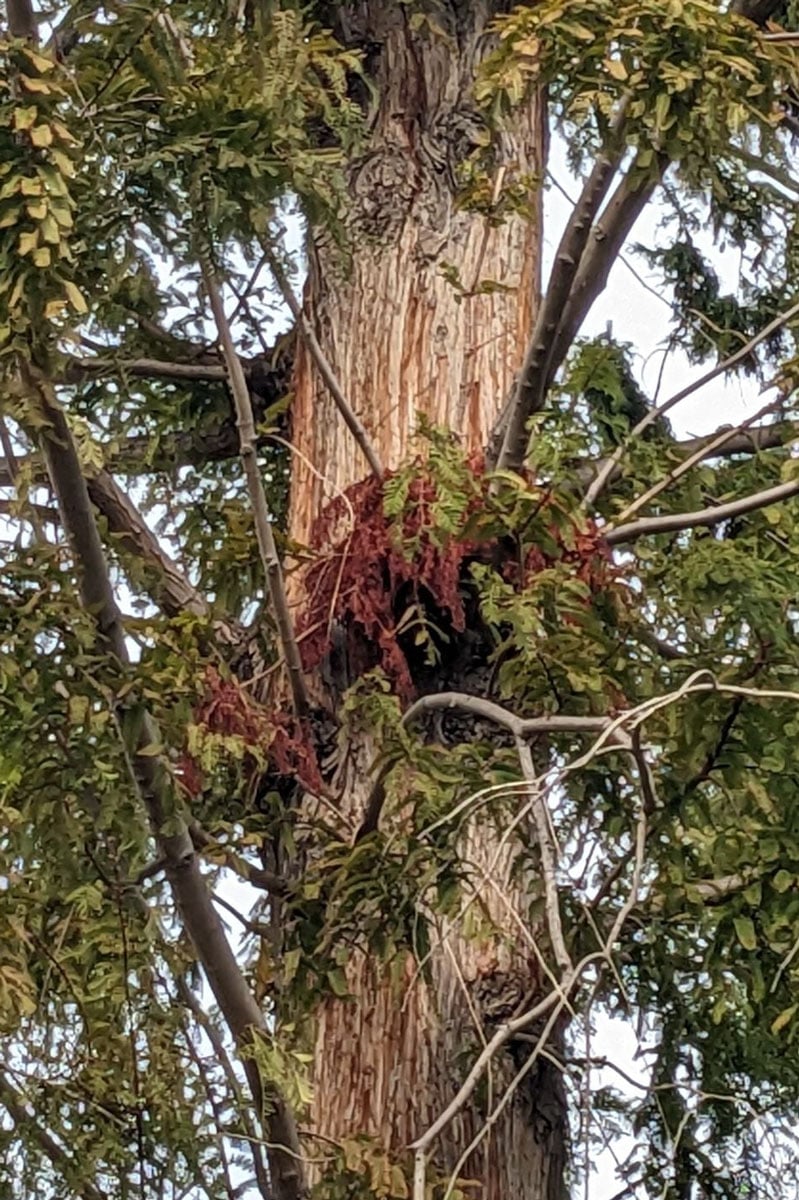
Dreys are easiest to see on deciduous trees after the leaves have dropped. They can also be spotted in evergreen trees, where dried needles fade to a reddish-brown color and stand out against the surrounding green foliage.
What species of squirrels in the United States build dreys?
In the United States, several species of squirrels build dreys, and these include:
- Eastern Gray Squirrel (Sciurus carolinensis): Commonly found in the eastern U.S. and introduced to the western part of the United States, these squirrels are known for their gray fur and bushy tails. They are adept at building dreys in urban and suburban areas as well as forests.

- Western Gray Squirrel (Sciurus griseus): Native to the western U.S., particularly along the Pacific Coast, these squirrels have a distinct, more silvery-gray coat compared to their eastern counterparts.
- Fox Squirrel (Sciurus niger): The largest species of tree squirrel in North America, the fox squirrel is known for its varied fur color, ranging from gray to reddish-brown and tan fur on the underbelly. They are widespread across the eastern, midwestern, and some western states.

- Red Squirrel (Tamiasciurus hudsonicus): Smaller than the gray squirrel, red squirrels have reddish fur and are found in both coniferous and deciduous forests, primarily in the northern and western parts of the U.S.
- Douglas Squirrel (Tamiasciurus douglasii): Native to the Pacific Northwest, the Douglas squirrel is a small, energetic species with a preference for coniferous forests.
What do squirrels use dreys for?
Dreys have a number of uses for tree squirrels.
For warmth and weather protection
Dreys that are enclosed provide protection for the squirrels against weather conditions. Dreys provide shade from the sun, keep the squirrels dry during storms, and are warmer than the ambient air during the winter. A study of dreys that was done in 1935 measured the temperature outside and inside 65 empty dreys during the winter in Russia. Isakov & Lubimov found that while temperatures outside were well below freezing (ranging between -1° and -10 °C) the temperatures inside the dreys were much warmer with temperatures more than 10° to 18° C higher inside the next (ranging between 1° to 10°C).
A similar study by University of Helsinki researcher Erkki Pulliainen found similar temperature differentials. For his study, Pulliainen measured the external and internal temperature of 74 dreys inhabited Red squirrels in Lapland repeatedly over four winters. What Pulliainen found was that the body heat of the squirrel raised the internal temperature of the drey to 25° C (77° F). Even when the squirrel had exited the drey, the temperature stayed elevated and never went below 3° or 4° C and quickly reached 25° C within 10 to 30 minutes of the squirrel returning.
To hide from predators
As prey animals, squirrels are at risk of predation from hawks, falcons, and other aerial predators. Dreys provide a quick and safe place to retreat to when a bird of prey is circling overhead.
A safe place to raise a brood
These nests provide a safe and warm environment for the baby squirrels, known as kits or kittens. The mother squirrel builds the drey to be sturdy and comfortable, using materials like twigs, leaves, and grass. It’s in these nests that she cares for her kits until they are old enough to venture out on their own. Isakov & Lubimov also noted that female squirrels will often evict their male mates from the drey in preparation for raising their young.
Hidden homes revealed
For much of the year, squirrel dreys remain hidden beneath a canopy of leaves. As deciduous trees shed their foliage each fall, these carefully constructed nests become visible, offering a glimpse into the lives of tree squirrels. What looks like an untidy clump of leaves is actually a well-insulated shelter that helps squirrels rest, stay warm, avoid predators, and raise their young throughout the year.
References
Isakov, J. A., & Lubimov, P. M. (1935). Biology of the hares and squirrels and their diseases. Mantejfel, P. A., (Ed.) Moscow.
Pulliainen, E. (1973, January). Winter ecology of the red squirrel (Sciurus vulgaris L.) in northeastern Lapland. In Annales Zoologici Fennici (pp. 487-494). Societas Biologica Fennica Vanamo. https://www.jstor.org/stable/23731714
Tittensor, A. M. (1970). Red squirrel dreys. Journal of Zoology, 162(4), 528-533.
This article was originally published on December 3, 2023 and has since been updated.
