
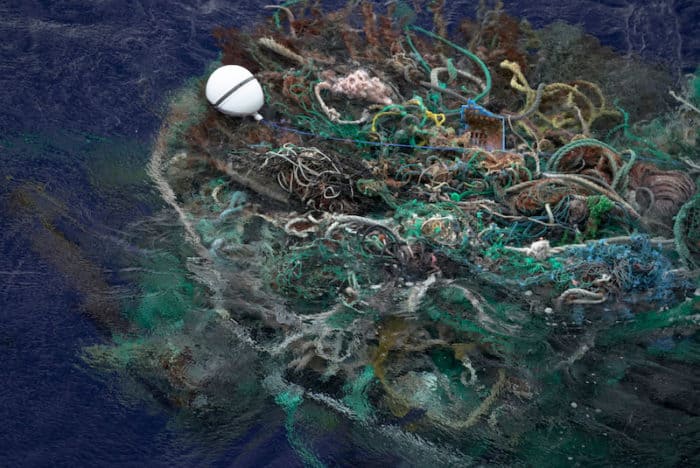
A gyre swirling in the Pacific Ocean form points of accumulation of massive amounts of trash. Known as the North Pacific Subtropical Convergence Zone or the Pacific Gyre, over 1.8 trillion plastic items weighing over 80,000 tonnes is trapped in this area. Fishing nets, plastic bottles, and other trash accumulates in this area. Ocean Voyages Institute (OVI), a nonprofit, recently collected 40 tons of trash from the Pacific Gyre.
OVI used satellite technology to pinpoint areas of dense debris accumulation with the primary goal of removing as much fishing nets as possible. These nets, known as ghost nets, are made up of nylon or polypropylene can drift for decades and cause the death of an estimated 380,000 marine mammals each year. To find these nets, OVI tasked yachts and ships with attaching satellite trackers to any fishing nets they encountered. The attached devices pinged the real-time location of this fishing debris so that OVI could track down and collect this trash during its cleanup mission.

More:
