
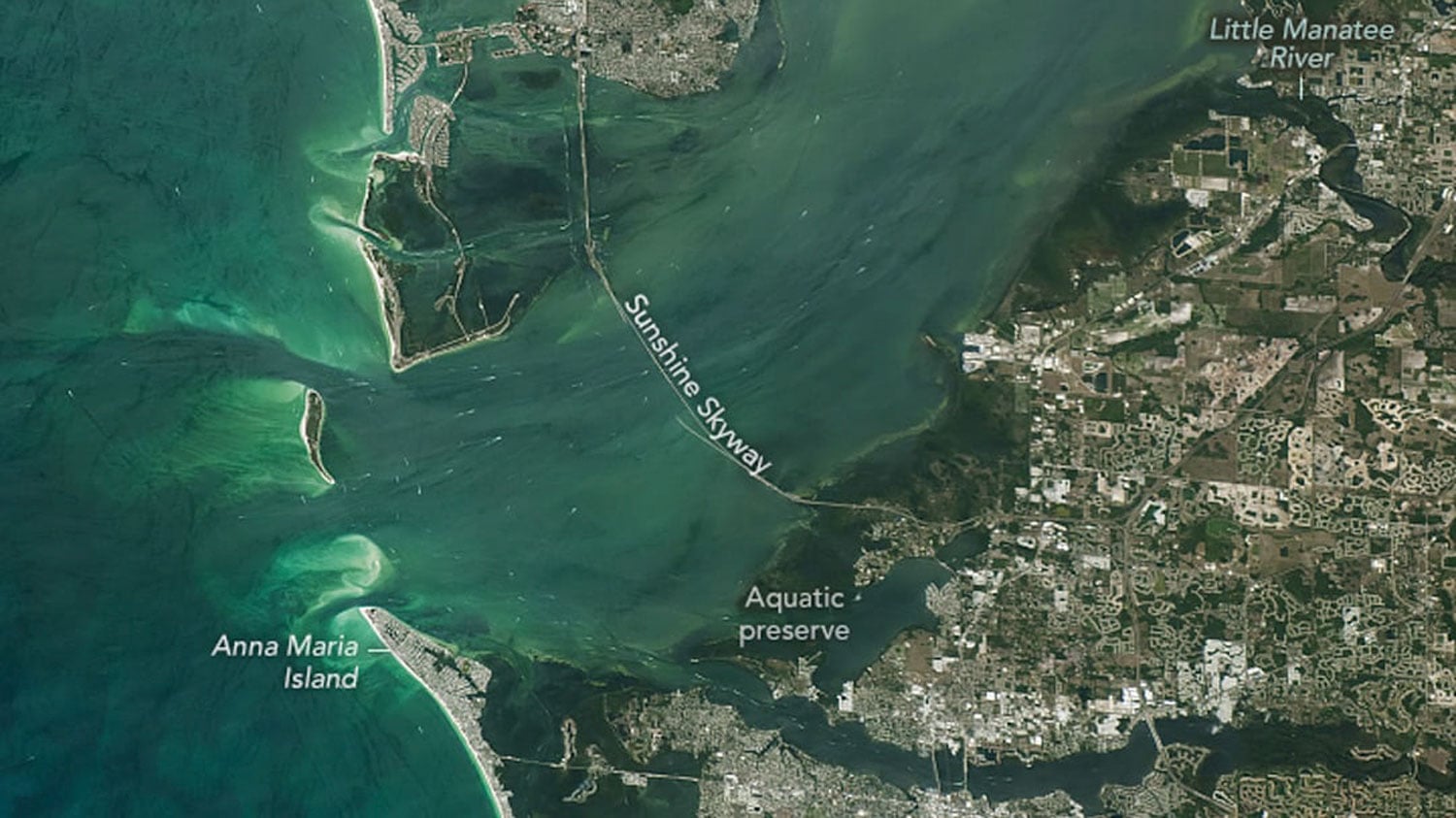
Covering about 400 square miles (1,036 square kilometers) of surface water and shallow wetlands, Tampa Bay is Florida’s largest open water estuary.
An estuary is a coastal body of water where freshwater from rivers mixes with saltwater from the ocean. These brackish environments are among the world’s most productive ecosystems, providing habitat for fish, shellfish, birds, and marine mammals while helping protect coastlines from storms.
Why Tampa Bay is an estuary
Several rivers, including the Hillsborough, Alafia, Little Manatee, and Manatee rivers, are the primary sources of freshwater flowing into Tampa Bay. Hundreds of smaller streams and tributaries also contribute freshwater that mixes with saltwater entering from the Gulf of Mexico.
This continual mixing creates brackish water that supports mangrove forests, salt marshes, and other habitats adapted to varying levels of salinity.
A shallow, productive ecosystem
Tampa Bay is relatively shallow, with an average depth of about 11 feet (3.4 meters). Because sunlight reaches much of the bay floor, extensive seagrass meadows thrive beneath the surface.
These underwater seagrass beds provide important nursery habitat for juvenile fish and crustaceans while supporting species such as manatees, sea turtles, dolphins, and wading birds. Along the shoreline, mangrove forests, salt marshes, and tidal flats provide additional habitat and help stabilize the coast.

Why Tampa Bay is important
Beyond its ecological value, Tampa Bay supports commercial and recreational fisheries, tourism, shipping, and outdoor recreation. After decades of pollution and habitat loss during the twentieth century, restoration efforts have improved water quality and restored extensive seagrass habitat, making Tampa Bay one of Florida’s notable estuary conservation success stories.
Frequently asked questions
What is an estuary?
An estuary is a coastal body of water where freshwater from rivers mixes with saltwater from the ocean, creating a brackish environment that supports a wide variety of plants and animals.
Why is Tampa Bay called an open water estuary?
Tampa Bay contains a large expanse of open water connected directly to the Gulf of Mexico, distinguishing it from estuaries dominated by marshes, lagoons, or narrow tidal channels.
What rivers flow into Tampa Bay?
The Hillsborough, Alafia, Little Manatee, and Manatee rivers are the primary sources of freshwater flowing into Tampa Bay, along with hundreds of smaller tributaries.
Why is Tampa Bay important?
Tampa Bay supports one of Florida’s largest seagrass ecosystems, diverse wildlife, commercial and recreational fisheries, shipping, and tourism.
Why are estuaries important?
Estuaries provide critical habitat for many species, filter pollutants from runoff, reduce coastal erosion, and help buffer shorelines from storms.
