
GIS and Geospatial Technologies
Articles focusing on the application of geographic information systems (GIS), geospatial technologies, remote sensing, LiDAR, and Global Positioning System (GPS). These technologies serve as critical tools for understanding and interacting with our physical environment. GIS allows for the mapping and analysis of spatial data Geospatial technologies refer to the various tools used to measure and analyze Earth’s lands and resources. Remote sensing provides a way to collect data from a distance, often via satellites or high-flying aircraft, and is commonly used for environmental monitoring and military applications.
GIS subcategories :
GIS Career | GIS Data | GIS Industry | GIS Learning | GIS Software | GPS | Remote Sensing | Spatial Analysis
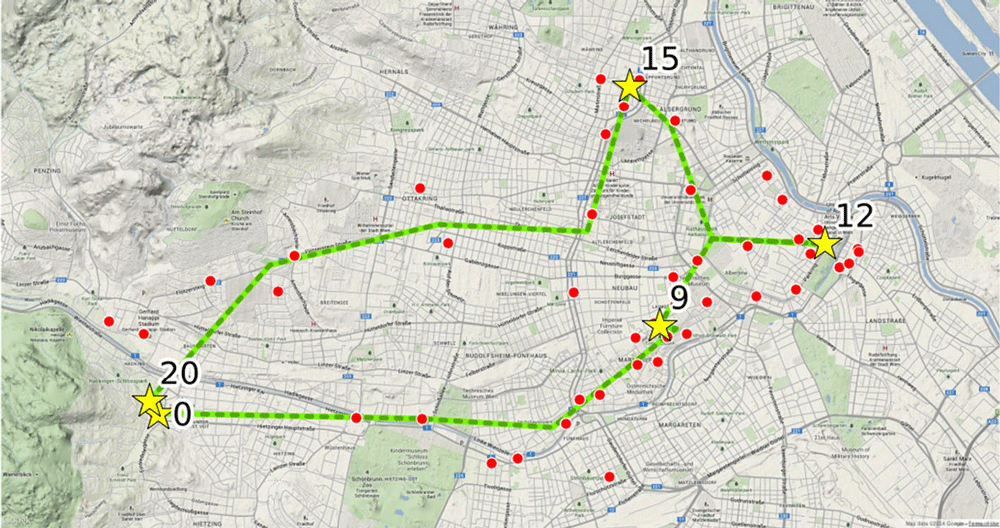
Using Cell Phone Data to Map Urban Activity Patterns
Mapping mobile cellular data has a major potential in allowing a better understanding of how we use urban spaces, including transport networks and access to events and venues.

Spatial Challenges of Navigating Rural Roads for Self-Driving Cars
Researchers from MIT are testing the use of GPS and LiDAR to enable autonomous navigation in rural areas lacking detailed 3D maps.

Monitoring and Mapping Microplastics in Marine Ecosystems
Advancements in satellite remote sensing techniques are paving the way toward the development of high resolution and temporal maps of marine microplastic distribution.

Using Drones and Remote Sensing for Mapping and Counting Animals
Remote sensing data from satellite and UAV imagery has been used by researchers in the mapping and observation of wildlife, in particular counting the number of animals in remote locations.

Black Marble: Nighttime Lights Data from NASA
NASA's Black Marble provides a suite of nighttime geospatial data acquired from Suomi satellite's Visible Infrared Imaging Radiometer Suite instrument.

What are Weird Polygons?
The straightforward definition of a weird polygon is a GIS data feature that is missing nodes.
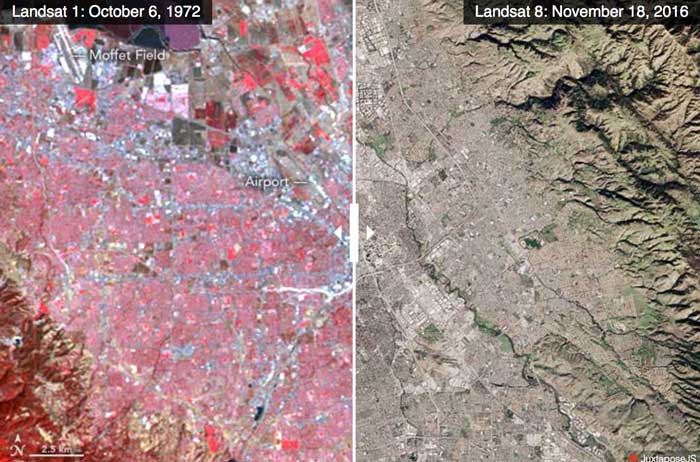
Department of the Interior is Considering Charging for Landsat Data
The Department of the Interior (DOI), which oversees the USGS, has tasked a federal advisory committee with exploring how instituting a fee for Landsat data might impact scientists and other users
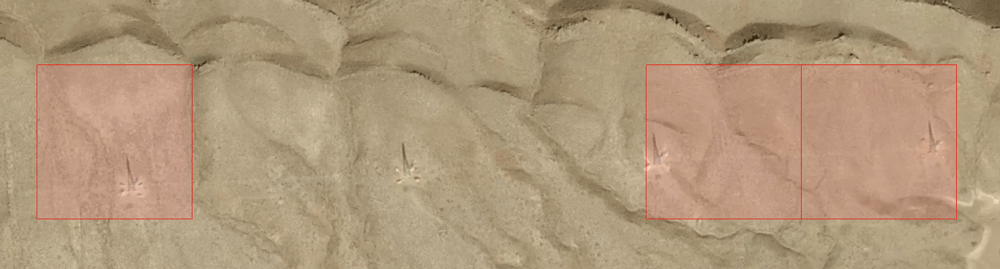
Using Machine Learning to Speed Up Electrical Grid Mapping
Development Seed, working for the World Bank Group, created a methodology for integrating machine learning with manual mapping in order to speed up the mapping of high-voltage (HV) grids in developing countries.

Where to Find GIS Data for Historical Country Boundaries
Finding historical GIS data can be hard to find. Listed here are available sites that offer historical country data in GIS file formats.

Viz Palette Helps You Pick Colors for Your Maps and Data Visualizations
There's a new color picker tool to help with selecting a palette for data visualizations.

Over 2000 Sentinel-1 Satellite Images Were Used to Create a Map of Land Deformation in the United Kingdom
A new map of the United Kingdom map tracks areas of land subsidence and uplift based on processed data from Sentinel-1's Synthetic Aperture Radar (SAR).

Mapping Minerals with Satellite Imagery
Mapping minerals with remote sensing was one of the main motivating reasons for creating the earliest multispectral satellite systems.

Tool from Sentinel Hub Lets You Create Time-lapse GIFs from Satellite Imagery
The EO Browser allows creating animated GIFs from satellite image time series. This tutorial demonstrates how to create your own time-lapse GIF.

Detecting Flooded Roads From Satellite Imagery
Mapping flood damage by manually examine imagery is a time-intensive and expensive process. New, automated methods using satellite data that compare pre and post-flood conditions are being developed.

What is a MXD File?
Files with the extension .mxd are ArcMap document files and stands for Map Exchange Document.

Using GIS to Study Gentrification
Amid US gentrification trends, municipalities are increasingly using GIS to study its impacts.

The Use of Drones in Human and Physical Geography
With the widespread use of drones, methods are likely to be further refined to improve not only the use of UAVs in physical measurements in geography but even expanded to areas of the social sciences.
GIS, Data Preservation, and Gentrification
Olivia Harne discusses how smart planning that incorporates GIS needs to take into account the historic identity of gentrifying neighborhoods.

Rapid Ocean Floor Mapping
Rapid ocean floor mapping is considered one of humanity’s grand challenges. To highlight this challenge, Xprise recently announced the finalists for its grand challenges competition to rapidly map the ocean floors.

Visualizing Temporal Data with GIS
While mapping spatiotemporal data has remained a challenge, increasingly we are seeing tools that are available on common open source platforms (e.g., R statistical package and QGIS) or commercial platforms such as ArcGIS.

Adding “Early Voting Wait Time” Information to a Layer in ArcGIS.com
Tracy Garrison outlines an example of how a “County” might provide current early voting wait times to the public with ArcGIS.com and coding.
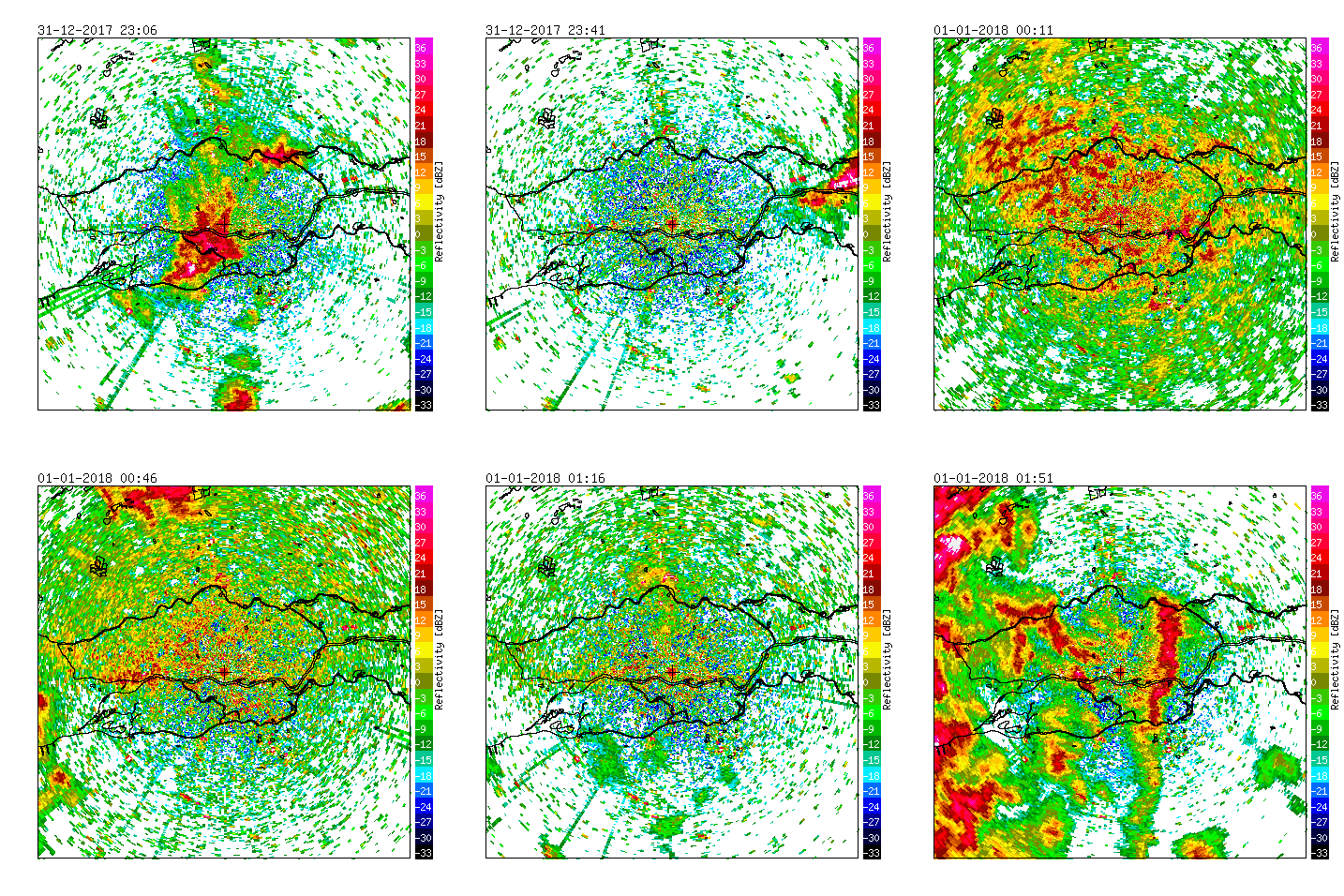
Mapping How Birds Are Affected by Human Activity
GIS and spatial analysis have demonstrated the complexity of how anthropogenic disturbances could affect birds and bird habitats.

The Role of GIS in Predicting Road Conditions
Recent developments in GIS and analytical applications have demonstrated that predicting road conditions, and thus preventing traffic accidents and possibly even traffic in the first place, is possible.

Researchers Analyzed over 22 Billion Shipping Positions to Map the Global Footprint of Industrial Fishing
To map out global fishing activity, over 22 billion AIS messages between 2012 and 2016 were analyzed by researchers.
QGIS 3.0 Released
Version 3.0 of QGIS, the popular free and open source GIS software, was released today.

High Altitude Pseudo-Satellites
High altitude pseudo-satellites (HAPS) are systems or platforms that usually float or operate for long periods, sometimes for months, at about 20 km above the Earth’s surface and can be potentially used to complement earth observation satellites.